3D kitchen rendering in the UK helps create a well-structured design environment for testing, refining and validating the design of a space before construction begins, being essential for architects, developers, manufacturers and interior designers. Professional rendering minimises the risk of uncertainties and additional costs caused by them through accurate visual simulation.
In the UK context, kitchen rendering services are not just a presentation at the end of an overall design process, but a significant part of the workflow. Based on our experience, clients don’t make decisions based on only beautiful images, instead, they focus on a clear understanding of the space’s characteristics from a long-term perspective.
What Is 3D Kitchen Rendering and Why UK Designers Use It?
3D kitchen rendering translates architectural intent into a controlled visual environment through simulation for testing design decisions before the start of construction.
UK projects are demanding, requiring evaluation of real-world behaviour, while drawings are not sufficient to reflect the lighting conditions, material perception and spatial constraints.
Drawings define geometry, but they do not show how materials react to natural light, how proportions are perceived in real space, or how contrast between surfaces affects overall balance.
3D kitchen rendering in London helps simulate how materials react to light, proportions and surface contrast to evaluate the overall balance, helping to test design decision without costly changes due to issues like incorrect scale or weak spatial balance before implementation.
Our case studies show that 3D rendering of a kitchen is essential for structured feedback, helping to speed up approval and reduce iterations.
Consult our team
What Are the Case Studies of GENENSE Kitchen Rendering in the UK?
The influence of rendering on producing visual output and decision-making is shown in the case studies below.
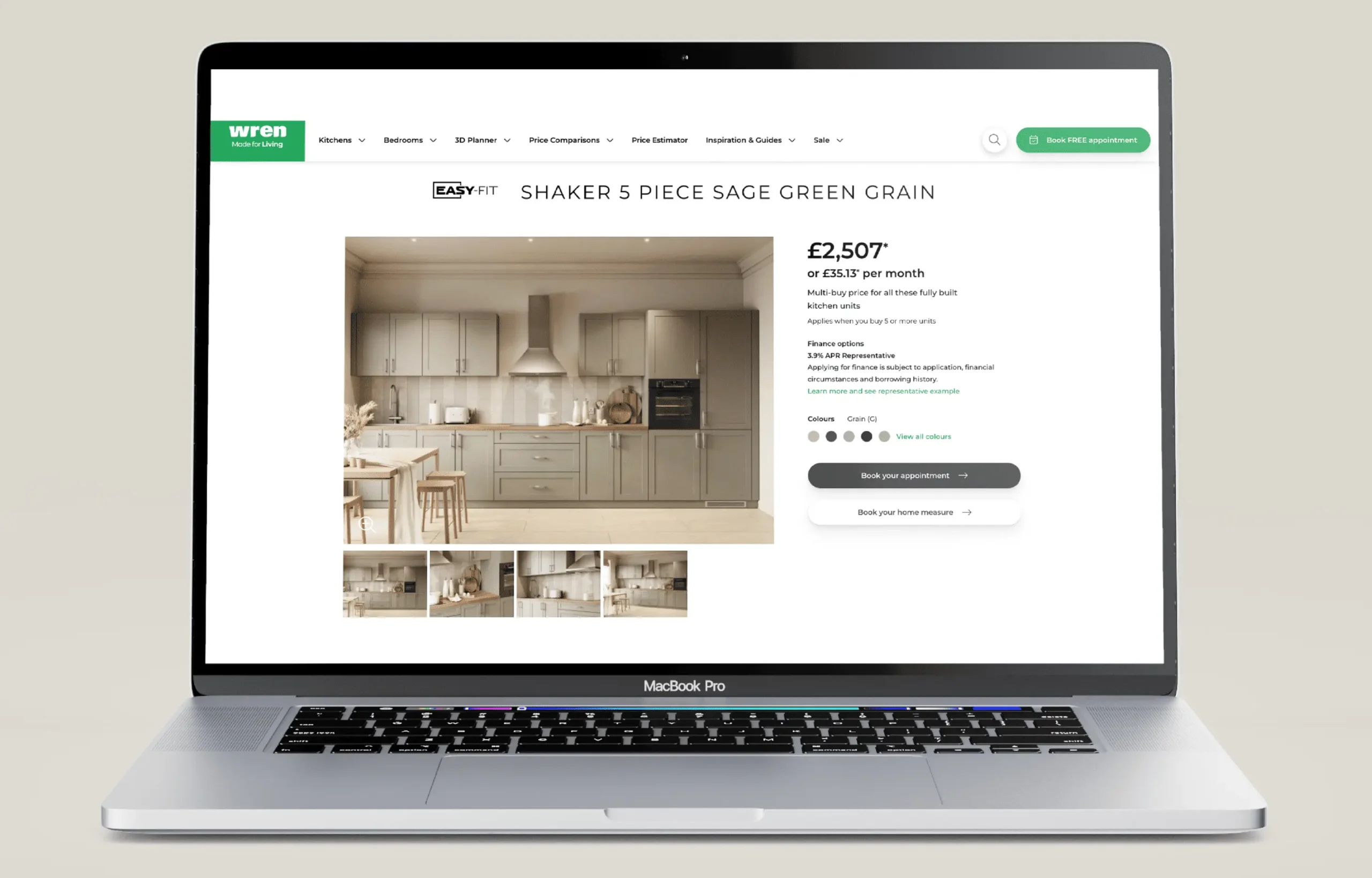
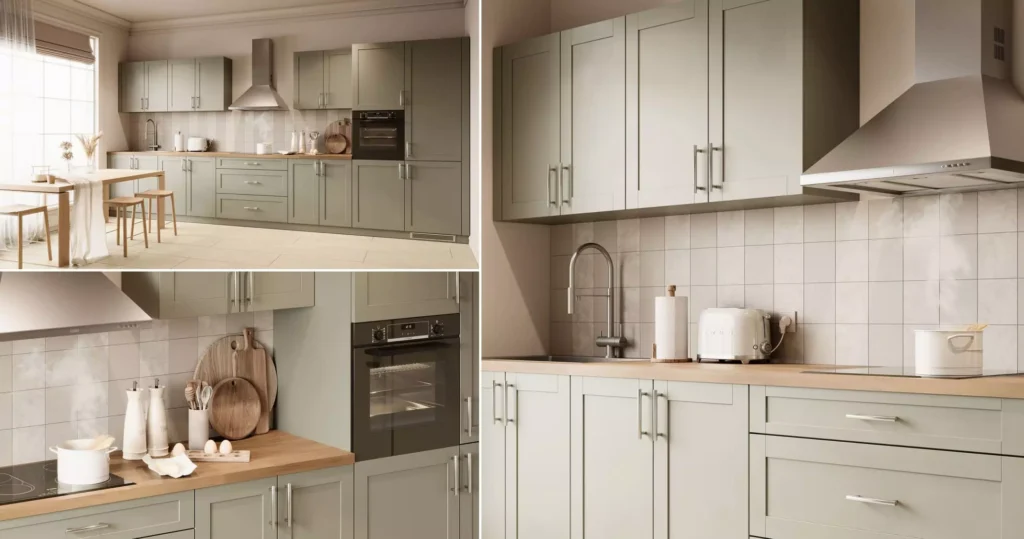
Shaker Kitchen – Wren Kitchens
Rendering for this product-level project, focused on scalable kitchen systems, ensured consistency across multiple variations. The achieved goals are:
representation of standardised components;
proportional accuracy;
scalable visual production across catalogues;
the client created compelling kitchen marketing images for the Wren website product page
As a result, we were able to present multiple configurations without physical prototypes.
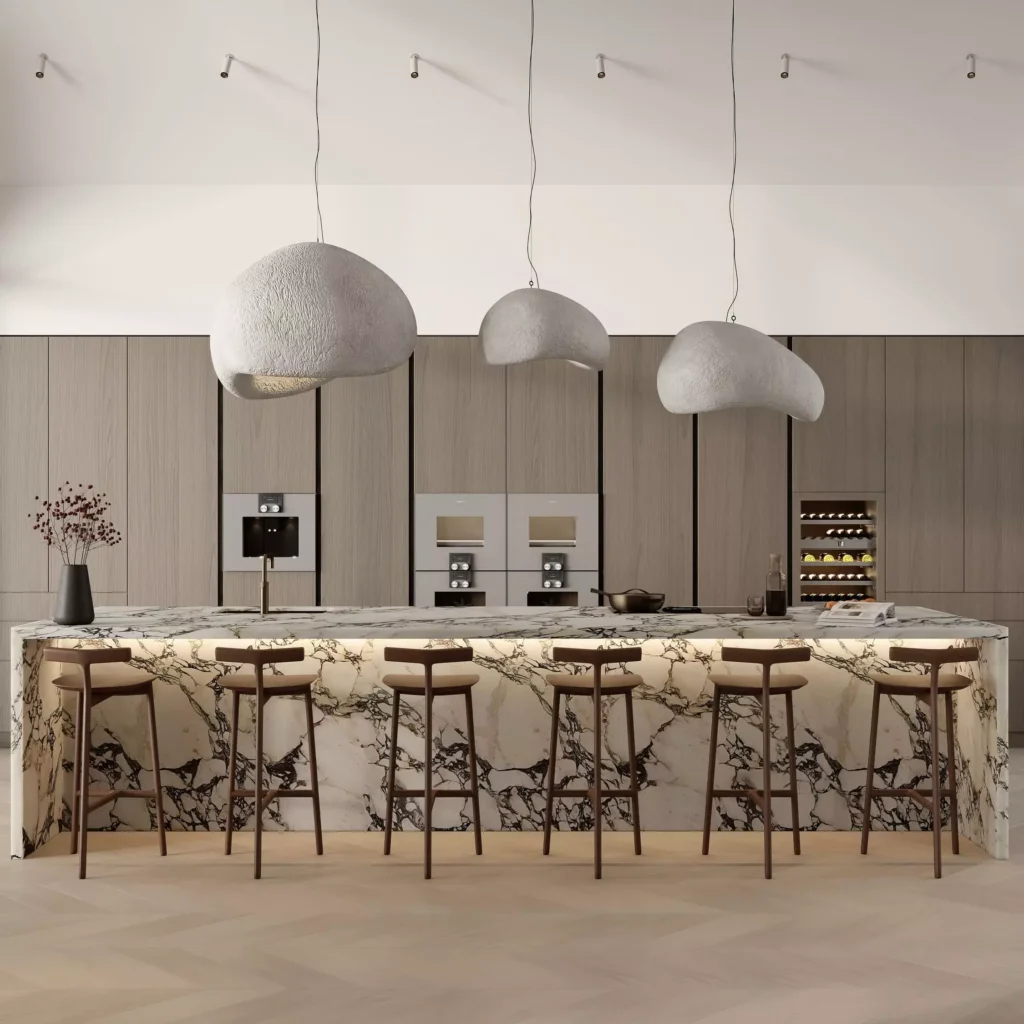
Marble & Wood Kitchen – HABIT Creative Studio
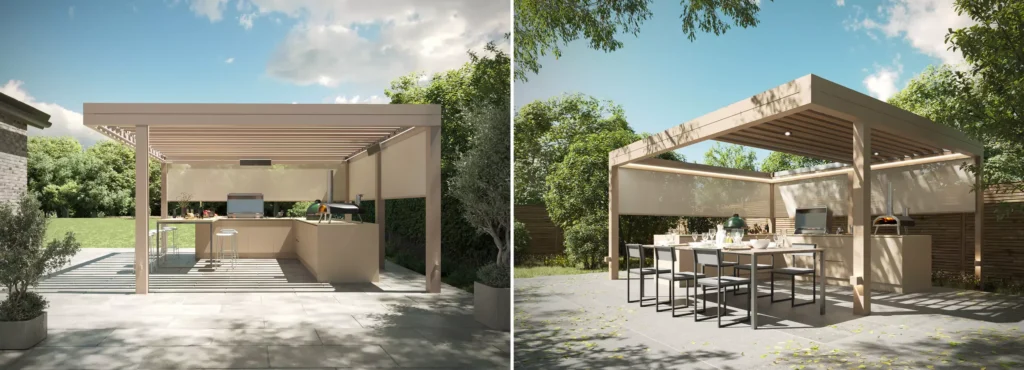
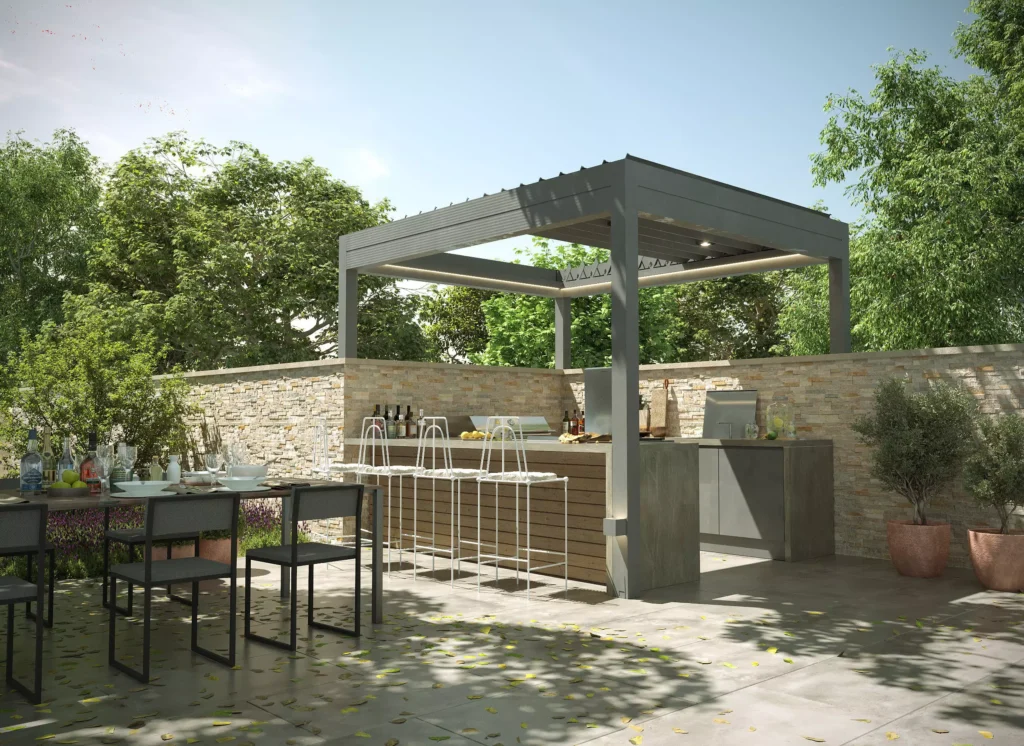
Within this project, an outdoor kitchen was developed in variable environmental conditions. The core challenge to be solved via outdoor kitchen rendering was to simulate environmental variation in a limited space to understand how materials and lighting would behave under the influence of different daylight scenarios. Key focus areas within the project are:
testing the kitchen in variable lighting conditions;
evaluation of material reflectivity in outdoor conditions;
validating the composition within the landscape context.
This approach helped to reduce the risk of mismatched materials during project implementation according to the design intent.
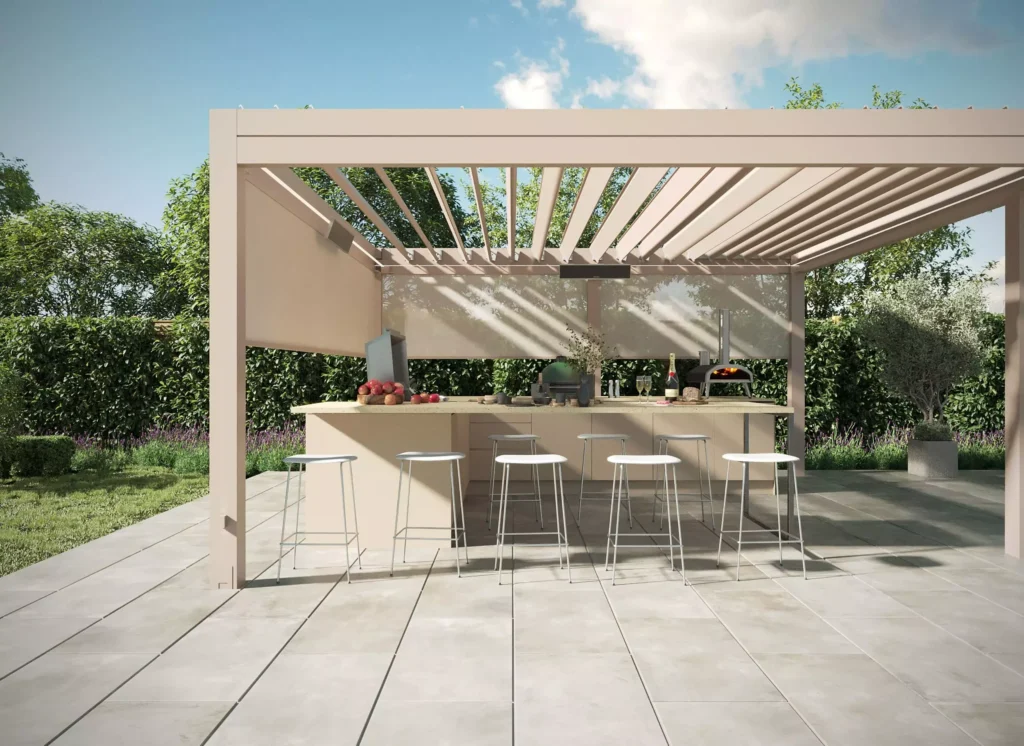
Outdoor Kitchen – HABIT Creative Studio
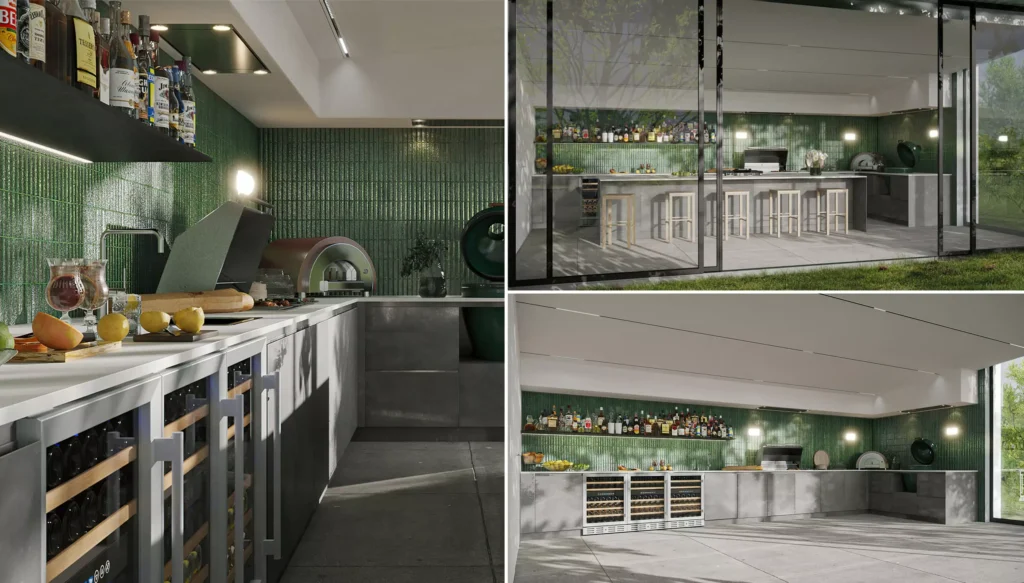
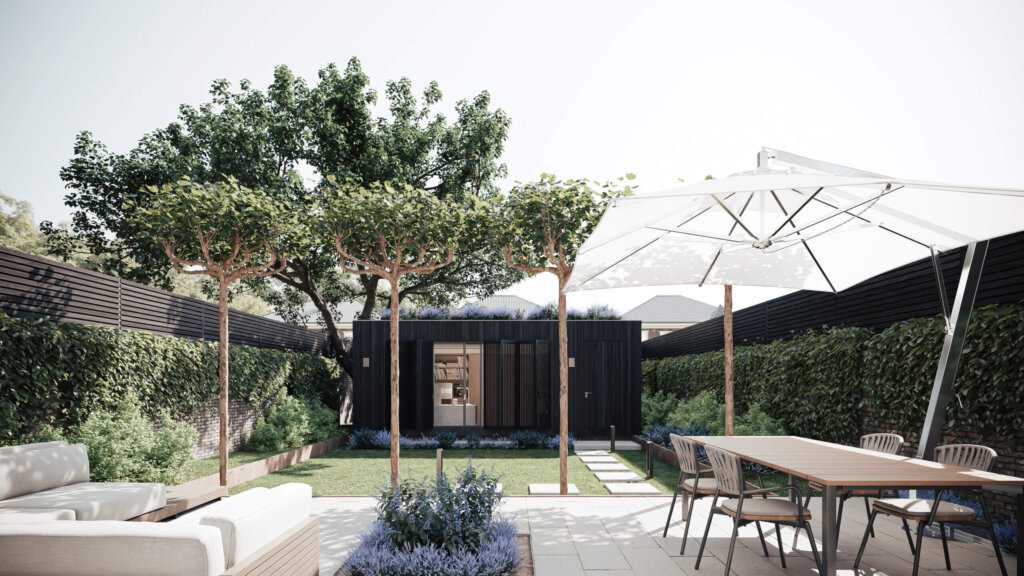
The key complication within this project was the limited natural light within dense urban surroundings to create a kitchen with a lounge area. Kitchen rendering services in the UK helped identify issues, not visible in drawings, such as:
too high contrast between materials;
uneven distribution of light in shaded areas;
poor spatial coherence from certain viewpoints.
Based on the analysis, the outdoor kitchen rendering in the UK improved visual balance by adjusting materials.
BBQ – HABIT Creative Studio
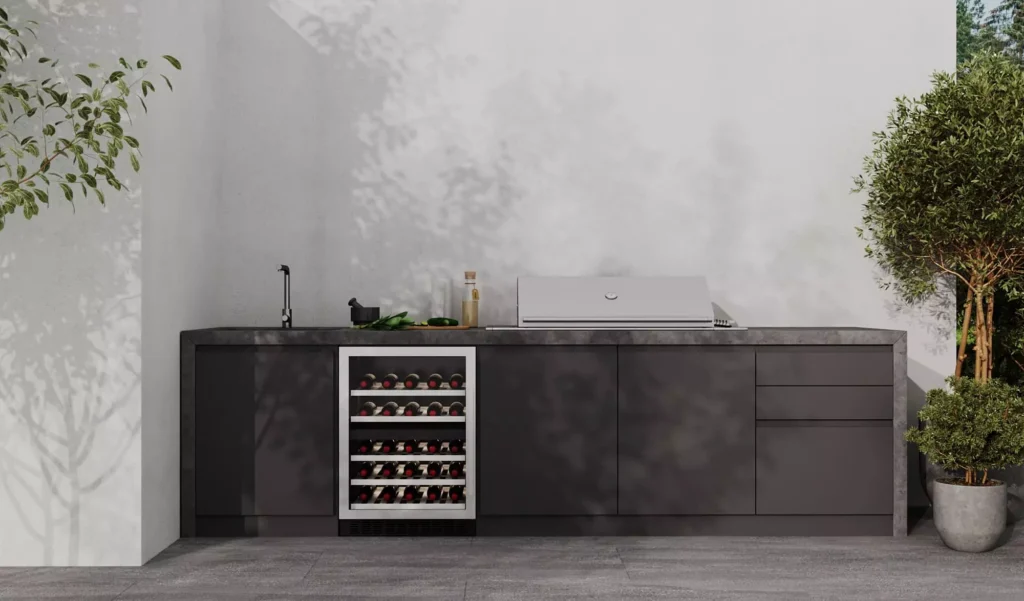
The main request for the compact BBQ installation was optimisation of functional efficiency without extra aesthetic complexity. Rendering helped to simulate real usage conditions, and included such key findings as:
inefficient circulation in the cooking zone;
suboptimal placement of equipment;
restricted operational flow in a tight layout.
The 3D kitchen rendering process in the UK took into account all requirements to prevent expensive on-site modifications.
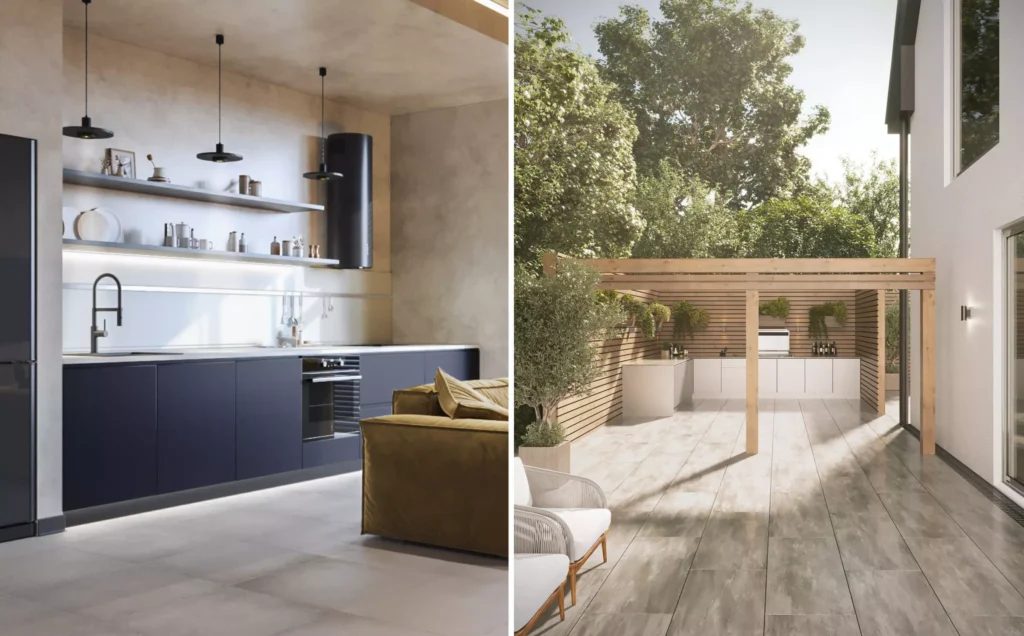
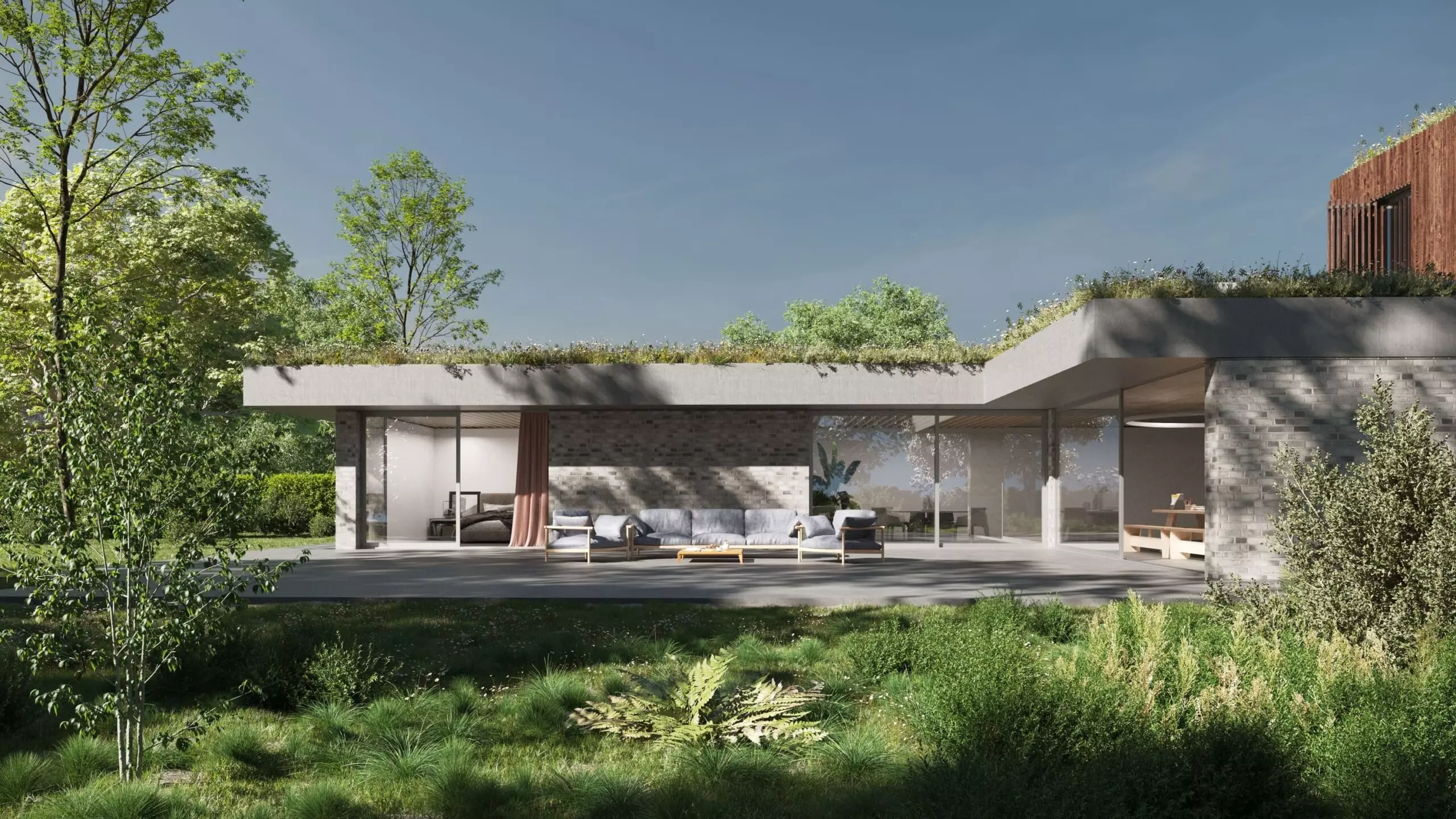
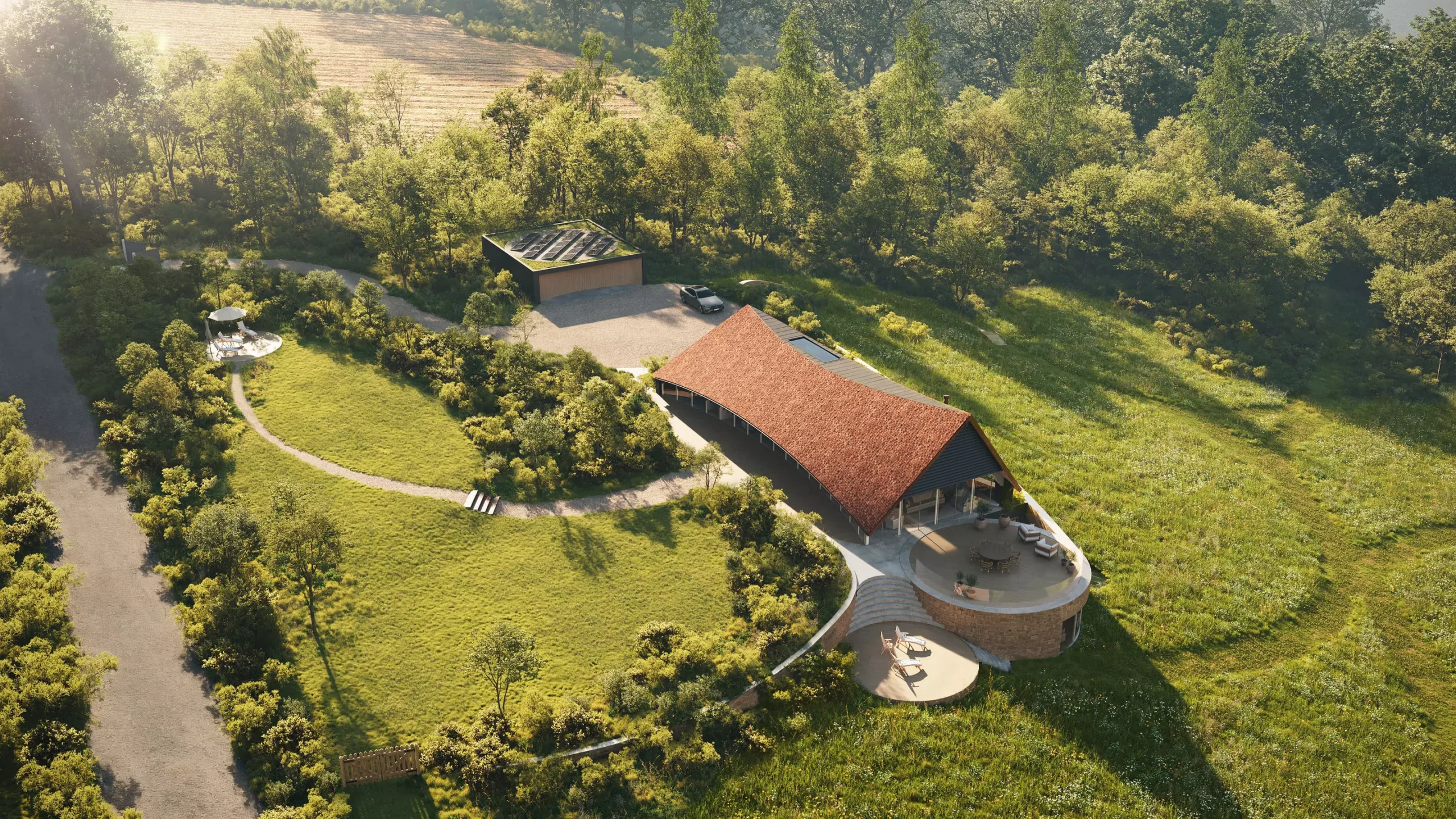
Garden Pavilion – HABIT Creative Studio
Rendering for this project, which combines multiple outdoor functions within a single environment, was used to evaluate the spatial relationships between the zones:
Kitchen rendering in the UK is a widely used solution, applicable across different sectors:
In architecture, to validate spatial logic and creation of the design intent in planning submissions within limited timeframes.
In property development, to reduce the risk of misinterpretation, financial forecast and to accelerate buyer decision-making in pre-sales communication.
In kitchen manufacturing and retailing, for fast market response and scalable product presentation, for example, in restaurant kitchen projects;
In interior design, before the finalisation of the construction decisions to create a cost-effective strategy.
In construction, commercial kitchen rendering reduces ambiguity during the phases of installation and construction.
Timing is the key distinction across all groups. Rendering demonstrates the highest effectiveness, being introduced at the point with the highest uncertainty.
Consult our team
Indoor vs Outdoor Kitchen Rendering: Two Different Challenges
Indoor and outdoor kitchen renderings cannot be treated as interchangeable because they operate under fundamentally different conditions.
In the case of indoor environments, the surrounding conditions, lighting, materials and spatial boundaries are controlled. The core challenge is to ensure the visuals match the final built result with precision.
In outdoor environments, variability is the key factor. Perception constantly changes due to the weather conditions, natural light and surrounding landscape. The main goal of 3D product rendering of a kitchen is to account for these variations without oversimplifying them. The key differences are:
Lighting conditions. For indoor spaces, the light is artificial and stable, while for outdoor spaces it’s dynamic and changeable.
Material behaviour. Controlled surfaces are typical for indoor spaces, while being exposed to environmental change for outdoor ones.
Context dependency. The indoor spaces act like an isolated composition, while the outdoor ones are integrated with architecture and landscape.
Usage logic. The indoor rendering must take into account functional workflow, while outdoor rendering should take into account social and experiential use.
Our years of experience show that the biggest issue of outdoor kitchen rendering is overly idealised visuals, when polished, unrealistic visuals create unrealistic expectations.
What Are the Key Types of Kitchen Rendering Services?
There are different types of kitchen rendering to solve different problems and create visually accurate and commercially effective results.
Kitchen Interior 3D Rendering
Photo-realistic kitchen renderings in the UK are essential for validating materials, lighting and layout before approval, translating technical drawings into a realistic presentation in real conditions with proper proportions, lighting and finishes, influencing:
the selection of the materials;
the adjustment of the lighting configuration;
spatial perception.
In our practical cases, this type of kitchen 3D rendering minimises the changes in design in late stages, achieving results that cannot be achieved with technical drawings.
Outdoor Kitchen and BBQ Visualisation
Outdoor kitchen rendering focuses on environmental integration in realistic lighting conditions, taking into account such factors as:
variations in light levels;
seasonal changes;
interaction with the surroundings.
Its value lies not only in visual impact but in credibility. Over-stylised visuals often distort expectations, especially in early-stage decisions.
In the UK, due to variable climatic conditions, the core values of 3D kitchen rendering services are realism and accuracy.
Garden Pavilion and Outdoor Living Rendering
The format is suitable for evaluating how multiple functional zones interact as a single system. The rendering focuses on the following aspects:
cooking zones;
dining spaces;
relaxation and chilling areas.
It evaluates parameters such as flow, usability and behavioural interaction across the environment as a single common space rather than isolating elements.
From our experience, this level of visualisation in 3D kitchen rendering is essential for projects because it emphasises its usability.
Kitchen Furniture and Product Rendering
Furniture and product renderings help to showcase multiple configurations of systems before physical production, supporting tasks such as:
generate a few product variations to choose from;
test different finishes and material combinations;
Maintain visual communication across catalogues.
For this type of project, photo-realistic kitchen renderings in the UK are critical because deviations in materials presented and proportions may cause extra expenses on the final delivery stage.
360° Virtual Kitchen Tours
360° tour rendering creates interactive environments for those users who want to explore layouts independently. The most common use cases of 3D kitchen rendering in London are:
How Much Does Kitchen 3D Rendering Cost in the UK?
Rendering costs in the UK depend on the complexity of the project. A basic level of accuracy is acceptable for a simple internal concept, while for marketing or investor-facing visuals, a much higher level of precision in lighting, materials, and composition is needed.
The production effort and overall cost of kitchen renderings increases with the number of details needed to be reflected through rendering.
Factors That Affect the Price
The cost of 3D rendering in the UK is not fixed and is priced individually, reflecting the efforts required for the fulfilment of a specific project. Two kitchens that can be visually similar may significantly differ in cost if one of them requires more refinement, interpretation, or decision support.
In practice, the pricing of commercial kitchen rendering in the UK depends on the following factors:
the complexity of the project;
the level of detailisation;
the quality of realism;
requested number of variations;
quality of drawings and input materials;
deadlines of the projects.
The total amount of modelling, adjustments and iterations influences the final result and would logically be reflected in the final price.
Typical Price Ranges for UK Kitchen Projects
In most cases, the cost of customised kitchen renderings reflects not only the visual output, but also the number of uncertainties to be eliminated before the beginning of the construction or sales. The requirements for accuracy, detail and revision control increase proportionally to the level of decision-making risk. As for the current market ranges in the UK, they are as follows:
Basic interior render prices from £150 to £400 per image;
Mid-range visual prices vary from £500 to £1,000 per image;
High-end photorealistic render prices vary from £900 to £1,900+ per image;
Complex multi-view project prices vary from £2,000 to £13,000+ for complete projects.
The variability of prices for kitchen design rendering in London depends on the purpose of the output, whether it’s used for client approval, internal validation, or marketing purposes. The specific features of internal renders are cost-effectiveness and focus on clarity, while in the case of marketing-grade visuals, higher precision in textures, lighting, and consistency of composition across multiple scenes are required.
Request a bespoke kitchen 3D estimate
What’s Included in Genense Pricing?
Genense provides an individual and structured approach to every rendering of a kitchen. Key components are as follows:
detailed interpretation of design intent and drawings;
professional 3D modelling of the kitchen and context;
setup of materials and lighting;
revision management based on feedback cycles;
preparation of the final output based on specific use cases.
Case studies of the company demonstrate that the main cost driver of kitchen remodel rendering in the UK is the number and complexity of revisions.
Why Choose Genense for Kitchen Rendering in the UK
The core value of kitchen rendering services in London is not just creating images, but supporting decision-making. The benefits of collaboration with Genense include:
interpretation of incomplete inputs;
structured management of iterations;
consistency;
price-optimised approach.
Our experience lets us state that fewer but more targeted renders lead to faster approvals and better project outcomes in comparison to numerous unfocused visuals.
FAQ
Rendering is a process used to visualise kitchen design with kitchen rendering software to reduce uncertainty, improve approval speed and support the pre-sales stage.
Indoor kitchen rendering in London is carried out under controlled conditions, while outdoor rendering takes into account the environmental conditions.
Timing depends on complexity, but on average takes 3–10 days to input quality and feedback cycles.
Yes. rendering helps to present multiple variations for testing to reduce the risk of expensive updates.
Rate article:
Nice
Average rating: 5 / 5
Vote count: 1
Denys Borozenets
CEO at GENENSE
Denys is the CEO of GENENSE Studio. His mission is to build an international community of passionate CGI professionals, where everyone can unlock their potential by creating high-end digital content that helps highlight any product on the global stage.
As a leader, he holds himself to the highest standard of responsibility - for both his own work and that of his team. For the members of GENENSE, responsiveness and open communication are the core values that drive their collective success.
In today’s architecture RFP (Request For Proposal) market in the US, experience and portfolio alone do not win projects anymore. In 2026, 3D visualization plays a big role in how fast a committee understands, supports, and remembers a project. Florida’s procurement market moves fast and has its own rules. Teams often review many proposals in […]
In architectural tenders in the UK, competition is not about ideas, but about how clearly they are communicated. Success depends on a well-built architecture proposal presentation, and 3D visualisation often becomes the key factor that strengthens the evaluation of design quality. Architecture tenders in the UK are the main way to win large projects in […]
For developers and architects, 3D rendering services in the Netherlands create realistic images of real estate projects. It helps speed up approvals, present ideas better to investors, and support early-stage sales. It also reduces the number of revisions and makes cooperation between all project participants clearer. GENENSE provides 3D rendering for international projects, including work […]
3D architectural visualisation in the UK is not a decorative add-on, but a functional decision-support tool for stakeholders in search of unique design solutions before construction begins. It collects drawings and BIM data to create a high-quality visual reference. 3d rendering services in the UK are essential for complex projects, which involve interaction of investors, […]
3D rendering services help check a project before it becomes expensive. They make it possible to fix architectural decisions, align them between all parties, and remove uncertainty at the planning stage, when changes do not affect the schedule or budget. For 3D architectural rendering in Costa Rica, strong visual accuracy is required. Projects often work […]