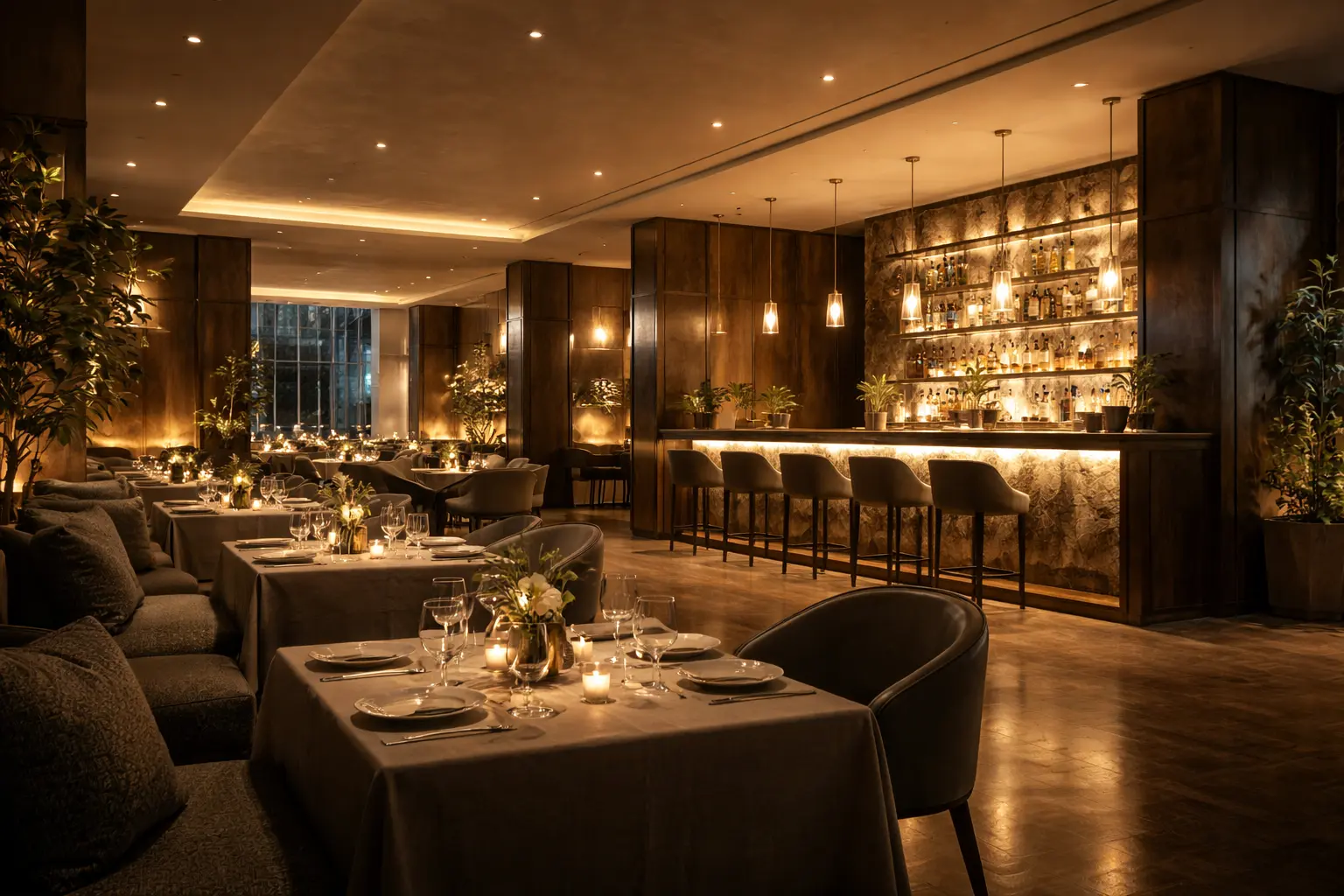
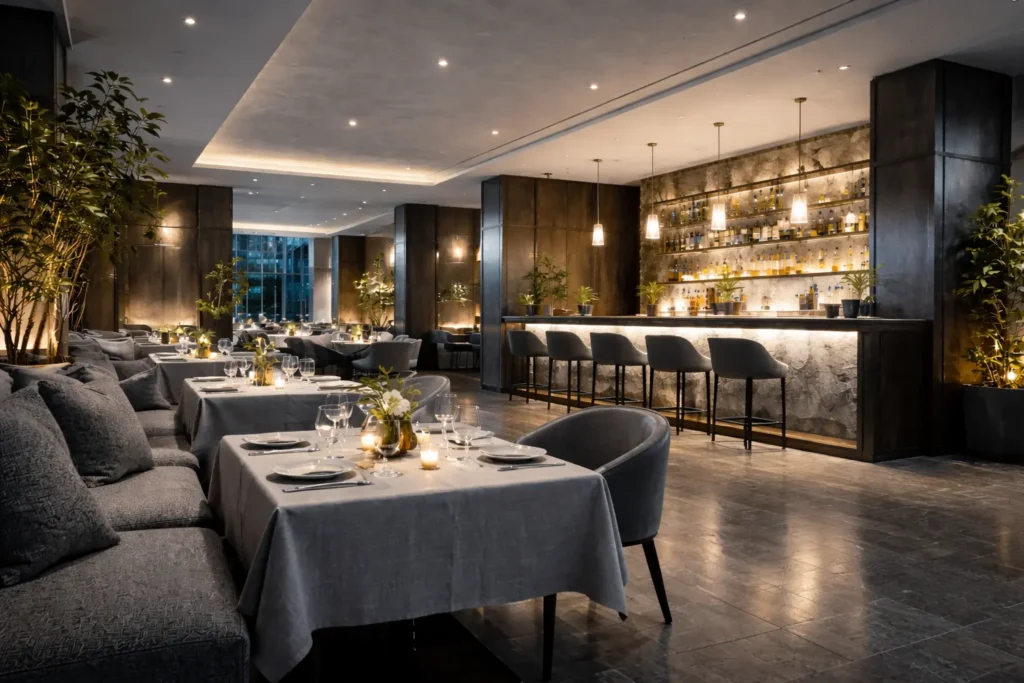
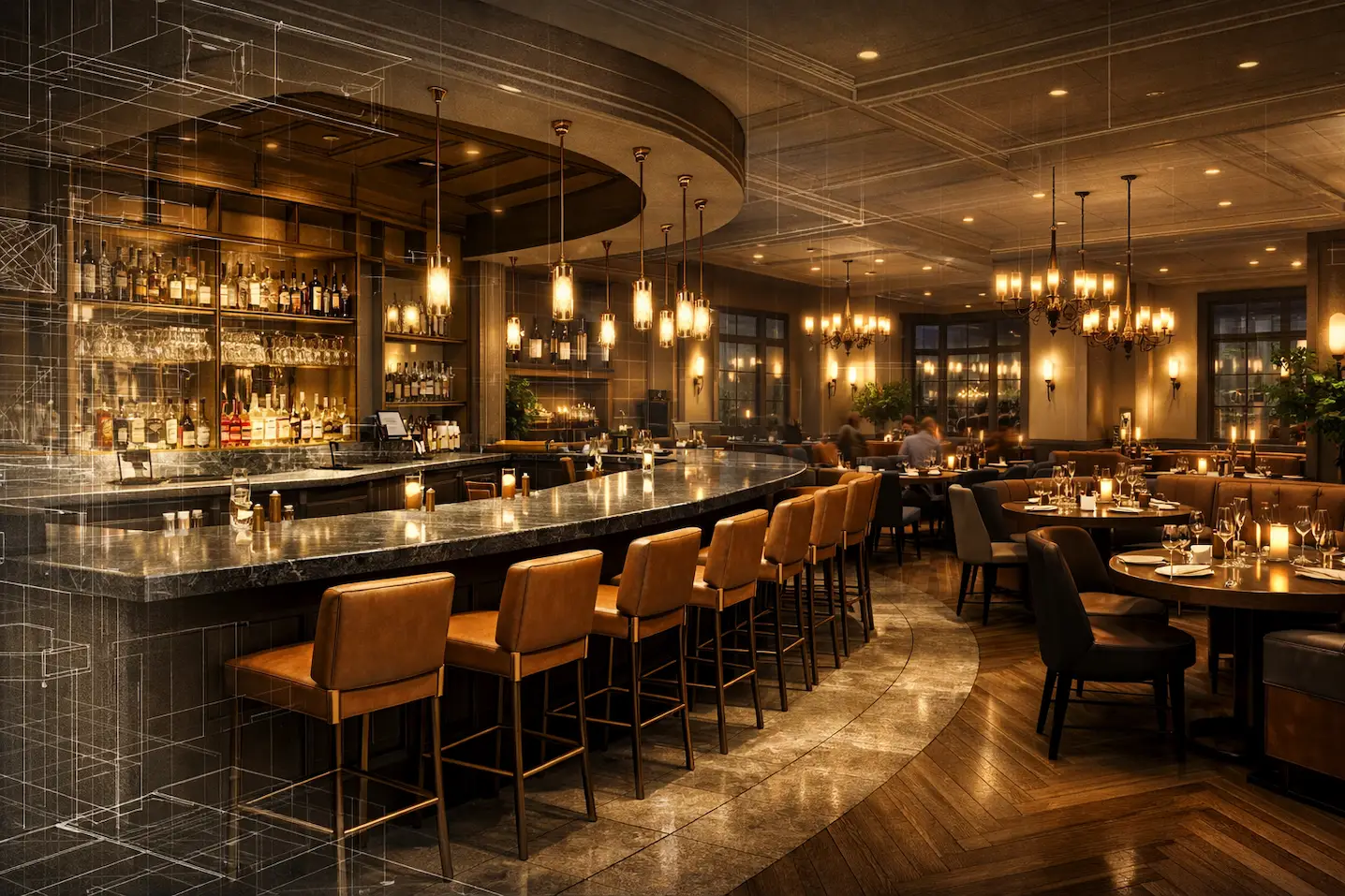
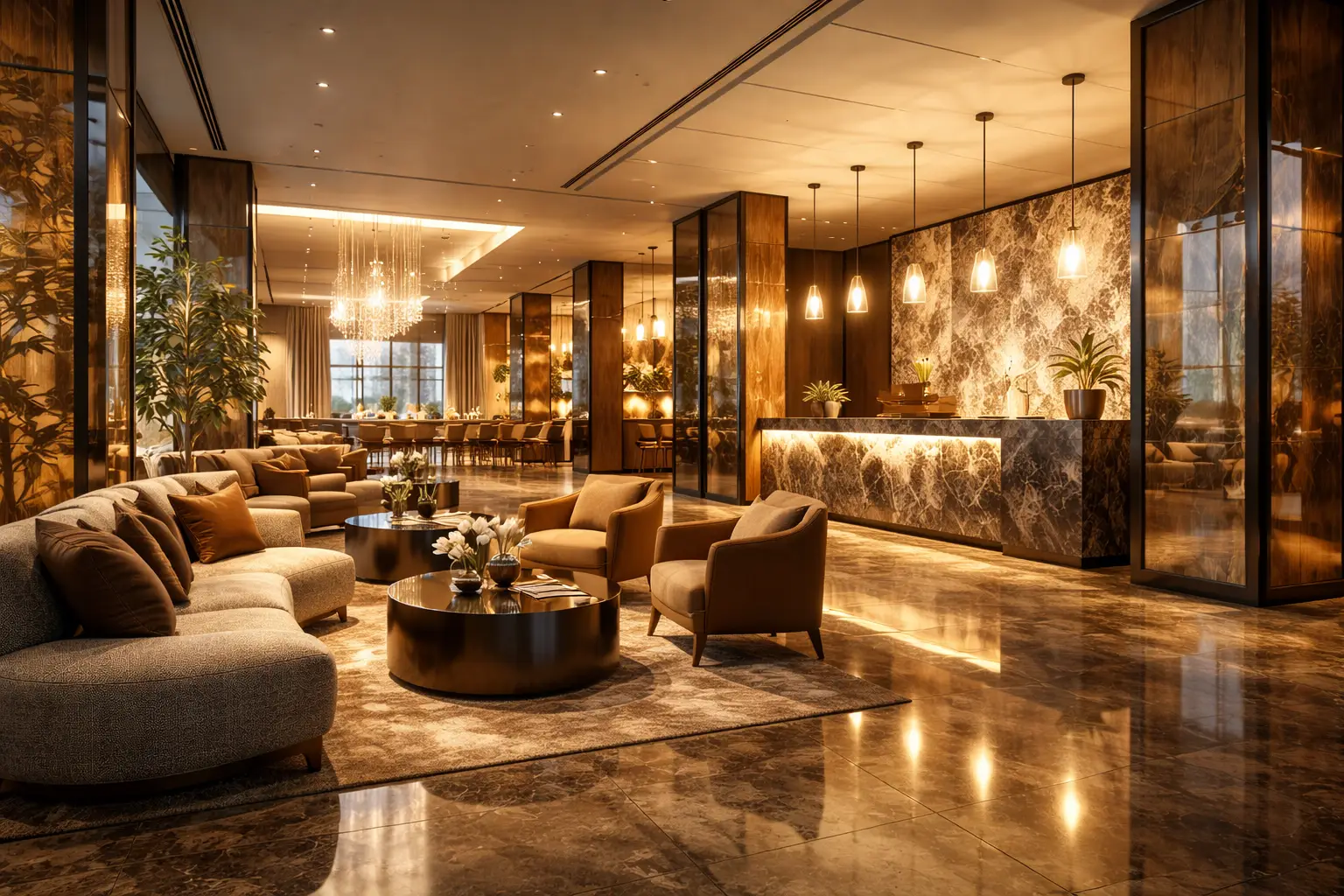
Smart lighting choices shape how a dining room feels, reads, and performs across the day. The question is less about a single fixture or dimmer and more about how multiple layers of light interact with materials, textures, seating, and service choreography. Photorealistic CGI makes those interactions visible before any equipment is purchased or installed. With calibrated camera settings, photometric data (when available), and controlled exposure, stakeholders can review the same room under varied scenes and align on a lighting direction more efficiently. For concept pitches, schematic design, or pre‑opening marketing, produced imagery and motion can show the experience of a bright lunch, the softness of late service, and the balance of accent to ambient levels around the bar. That clarity helps align operations, brand, and buildable details early, while still allowing for technical coordination with electrical, millwork, and AV consultants. When lighting is approached as a coherent system, our visualization becomes a practical instrument for testing and validating those decisions before implementation.
What shifts when you change the light
In our CGI scenarios, changes in lighting clearly show how a restaurant’s volumes are perceived and how surfaces read from the guest’s perspective. Contrast – not just overall output – helps direct attention to the plate, the menu, and faces. Warmer color temperatures often make wood and dark finishes feel softer, while cooler tones can make metal and stone read crisper, depending on the spectrum and color rendering. Color rendering influences how ingredients look and how fabrics and brand colors hold together. Brightness gradients along a corridor can support wayfinding and make circulation feel more intuitive, sometimes reducing reliance on additional signage. And above all, hierarchy matters: the bar, the pass, and the host stand each benefit from distinct luminance relationships.
Material behavior under light is equally decisive. Polished plaster, satin metal, or honed marble will scatter or reflect light differently; the same pendant may feel crisp over concrete yet glow over oak. Glassware and glossy glaze can produce specular hits that look lively in imagery but risk glare if not balanced. Similarly, ceiling height, soffits, and suspended racks compress or expand the perceived envelope, so the mounting position and beaming should be tested against sightlines from multiple seats. CGI is a controlled environment for that evaluation, where PBR materials, IES profiles, and camera tone mapping can be tuned to approximate on-site conditions and reduce guesswork.
When daylight is part of the project, we model how dynamic range shifts across the room so clients can evaluate it visually. A south-facing window wall can read very bright at midday and noticeably different toward dusk, depending on latitude, season, and surrounding context; the front‑of‑house team will likely adjust dimming curves as service transitions. Scenario‑based visualization illustrates those inflection points. That way, the atmosphere is discussed as a time‑based experience – brunch, pre‑dinner, late evening – not a single static target.
How we build lighting scenarios that read like reality
High‑fidelity visualization depends on disciplined inputs and a consistent review process. Our team starts with the architectural model, validates key dimensions around tables, counters, and ceiling systems, and then constructs a materials library with calibrated textures, reflectance values, and normal maps. Photometric data is attached to fixtures, and emissive elements are set with realistic intensities and color temperatures. Camera exposure, white balance, and filmic tone mapping are typically kept consistent per scene so that relative changes between scenarios remain comparable rather than stylistic.
A single restaurant interior lighting render can check an idea, but sets of frames – from the entry, the banquette corner, and the bar – communicate the whole space. In our review process, we generate a controlled set of scenarios where only one lighting parameter changes at a time to isolate its visual impact: beam spread, CCT, or dimming percentage. That isolates the effect and helps owners and design consultants to choose with clarity. For projects that benefit from motion, short cuts of 6–12 seconds visualize dimming ramps or transitions from daylight to electric light, making service shifts tangible.
Because fixture selection and distribution are often still in flux, we treat photometrics as placeholders until the lighting designer confirms specifications. Even at that stage, the imagery remains useful for seating strategy, menu legibility checks, and mood decisions. In our restaurant lighting design visualization, we commonly present four scenario presets that reflect typical service rhythms:
Bright lunch – higher ambient layer, cooler to neutral CCT, softer accents that avoid menu glare and keep tabletops readable for quick turnover.
Early dinner – neutral ambient, warmer accents focused on food and bar display, with vertical illumination at the host stand and entry portal.
Peak service – lower ambient to lift candlelight and pinspots, warmed task light at the pass, and accent layers that keep faces readable across the table.
After‑hours – localized pools for the bar and feature art, reduced back‑of‑bar brightness to avoid mirror glare, and restrained corridor guidance.
These presets are visualization frameworks that help design teams compare scenarios during review, not prescriptive lighting designs. For sites that center on late service, an evening restaurant lighting visualization package clarifies how dark the room can go while keeping operational tasks viable. For daylight‑rich sites, we map scene times against sun position to understand reflections and shadows on tabletops. Qualitative glare checks can flag potential bright-source hotspots at typical eye positions, while formal glare metrics (for example, UGR) still require dedicated calculations by specialists. Across all of this, our restaurant lighting CGI maintains consistent camera behavior so that the only differences you see are the ones you asked us to test.
In 3D render lighting workflows, exposure and highlight roll‑off shape perceived atmosphere as much as fixture placement. Subtle bloom, well-managed exposure (including shutter-equivalent settings), and low-noise sampling help the image feel credible rather than staged. High‑quality CGI lighting still leaves room for on‑site adjustment by the lighting designer and electricians, but it gives owner teams a realistic way to choose where they want the room to sit on the spectrum of bright to intimate.
When the brief calls for more analytical checks, a lighting simulation for restaurant spaces can visualize approximate illuminance distributions for comparative discussion in early design. It does not replace an engineering study, yet it usefully shows relative patterns – where accent light reaches the plate, how a wall wash reads behind banquettes, or whether a cove line will produce unintended scallops.
The decisions CGI helps you make before you build
In our experience reviewing projects in CGI, discussions are less about whether to light a bar or feature wall and more about degree, distribution, and timing. Scenario‑based imagery turns abstract preferences into specific options, grounded in the actual geometry and finishes of your project. That clarity simplifies conversations among interior designers, lighting consultants, chefs, and operators, each of whom reads the room a bit differently. The following are common decision points that become faster to resolve with targeted frames:
Menu and tabletop readability versus desired intimacy, including how candlelight and accent beams share the job.
Bar identity – luminous showpiece or matte backdrop – with attention to bottles, mirrors, and sightlines from the dining room.
Seating mix – how booths, two‑tops, and communal tables look and feel under different accent strategies, especially at perimeter banquettes.
Entry and host moments – whether the threshold feels welcoming at low light levels and how brand colors carry in signage and wall finishes.
Service choreography – pass, corridor, and POS visibility that supports staff without pulling attention from guests.
Beyond these choices, visualization supports the material narrative. Dark oak with brushed brass reads differently than pale ash with satin nickel; the same pendant can either warm or cool the palette. By placing proposed fixtures over the modeled finishes, lighting consultants see how the scheme holds together across brunch, pre‑dinner, and late service. That matters for wayfinding, dwell time, and the feel of hospitality at every seat.
In parallel, we often visualize daylight modulation elements at an early stage so that stakeholders can clearly discuss their impact. Roller shades, sheer curtains, or architectural fins adjust how deep daylight reaches. When those elements are represented in the model, the images show not just luminance but also the texture of light – the kind of detail guests remember.
Budget and risk notes worth considering
Lighting scenarios in CGI are not a substitute for detailed electrical coordination, but they are a practical way to align expectations before procurement and installation. When owners and design teams see the same space under several options, they are more likely to converge on a direction that suits both brand and operations. That alignment can help reduce late adjustments to decorative fixtures, avoid surprises around reflections or glare, and support smoother conversations with specialist consultants. The modest time invested upfront typically pays off in clearer briefs to suppliers and more confident sign-offs during mock‑ups.
For marketing teams preparing pre‑opening campaigns, scenario‑consistent imagery doubles as content – the same views used for design review can be graded for brochures, websites, and social. If your project benefits from context, we can integrate the dining room into photography using architectural photomontage, or extend the package with a 3D virtual tour that lets stakeholders navigate seats and sightlines. In all cases, the emphasis stays on credible light behavior and collaborative review, not on spectacle for its own sake.
When to commission restaurant lighting CGI
Architects and interior designers often engage us at the tail end of schematic design, when materials are largely agreed upon, and fixture intent is forming, yet before construction documents lock placements. When restaurant lighting CGI is commissioned at that stage, it provides sufficient fidelity to evaluate atmosphere while leaving room for technical iteration. For flagship sites, some clients request a later pass during mock‑ups to fine‑tune scenes against real samples, or an extra set of frames for marketing. Whether you need a handful of frames or a broader suite across multiple rooms, our scope scales to the decisions you need to make. We position our CGI work as a collaborative layer that supports architects, interior designers, lighting consultants, and operators with shared visual references. Our role is to make the lighting impact on restaurant atmosphere discussable with shared visuals – not to replace specialist expertise. If your upcoming project would benefit from scenario‑based imagery, we are ready to outline options, provide a clear schedule, and assemble a package that aligns with your milestones.
FAQ
Yes. Scenario‑based frames and short clips make abstract choices tangible for operators, investors, and brand teams. Instead of debating adjectives like cozy or bright, you can compare specific scenes from defined seats in the room. This clarity is especially useful when discussing lighting in restaurants with mixed audiences who read drawings and mood boards differently.
The reasons vary with concept and service, but the short answer to why restaurants dim the lights is to guide attention, manage contrast, and support the desired pace of dining. Lower ambient levels lift candlelight and accent layers so food and faces become visual priorities. Dimming also helps the room transition from daytime to evening without re‑aiming fixtures, while giving operators a simple control to adapt to occupancy and table mix. Balance remains key – the room still needs sufficient visual comfort for guests and staff.
In discussions about ambient lighting in restaurants, we set a baseline scene that expresses the room’s overall glow without flattening accents. From there, we adjust task and accent layers, track contrast at focal points, and review from representative seats. This ensures ambient light supports circulation, service, and atmosphere without overpowering the feature elements that define the brand.
Yes. Early tests are common, especially when interior designers want to explore the atmosphere while specifications evolve. We develop scenes using provisional profiles and refine them as products are selected. For restaurants with strong night trade, an additional pass dedicated to evening restaurant lighting visualization helps the design team agree on contrast and color temperature at lower ambient levels before mock‑ups.
A comparative lighting simulation for restaurant spaces helps architects and lighting consultants understand relative light distribution patterns, but it does not replace calculations prepared by engineers or lighting consultants. We coordinate with your specialists so our imagery reflects their intent. If deeper analysis is required, their findings can be layered into subsequent visualizations for review.
Restaurants are sensitive to tone and texture. Careful camera exposure, filmic highlights, and calibrated materials keep metals, woods, and ceramics reading naturally. In 3D render lighting, restraint matters – believable glow, clean reflections, and noise‑free shadows make the difference between a persuasive frame and an image that feels staged. When used alongside brand and operational input, this craft helps interior designers choose a lighting direction with clarity.
Rate article:
Nice
Average rating: 5 / 5
Vote count: 1
Denys Borozenets
CEO at GENENSE
Denys is the CEO of GENENSE Studio. His mission is to build an international community of passionate CGI professionals, where everyone can unlock their potential by creating high-end digital content that helps highlight any product on the global stage.
As a leader, he holds himself to the highest standard of responsibility - for both his own work and that of his team. For the members of GENENSE, responsiveness and open communication are the core values that drive their collective success.
Why visualization matters in investor and franchise conversations Early restaurant decisions are commercial decisions first. Investors and franchisors review a concept through the lens of risk, brand integrity, and operational throughput. In these discussions, drawings provide the facts, but pictures carry the argument. High-quality restaurant rendering places the capital plan, site constraints, and brand narrative […]
You’ve signed a lease, hired a designer, and started sketching floor plans on napkins. Then reality hits: Will 65 seats actually fit without making the room feel like a cafeteria? Can servers move between tables without turning sideways? Does the bar block the sightline to the entrance? These aren’t hypothetical problems. They’re the kind of […]
Architects, designers, and developers rely on visualization to align project stakeholders, validate design intent, and communicate options to non‑technical stakeholders. Yet the production route is not one-size-fits-all. This article outlines real-time vs traditional rendering from a visualization perspective, helping clarify which type of output fits specific tasks and milestones. We focus on realistic tradeoffs that […]
Clear visuals reduce confusion in complex building projects. At key milestones, architects must answer specific questions from developers, structural engineers, façade consultants, cost managers, and planning authorities. Floor plans and sections alone may not fully convey height perception, façade rhythm, daylight conditions, or spatial flow to non-technical audiences. This is where 3D visualization in architecture […]
3D product animation is the process of creating a computer-generated video that shows an item in motion – rotating, assembling, disassembling, functioning, or existing within a styled environment – using three-dimensional digital models rather than a physical camera. The product doesn’t need to exist. The environment doesn’t need to be built. Everything happens inside software, […]
3D interior rendering is a digital image of a room that doesn’t exist yet. It looks like a professional photograph – accurate lighting, real materials, actual furniture models – but the space hasn’t been built. Or it’s about to be gutted and redesigned. A 3D artist takes your floor plans, material picks, and design direction, […]