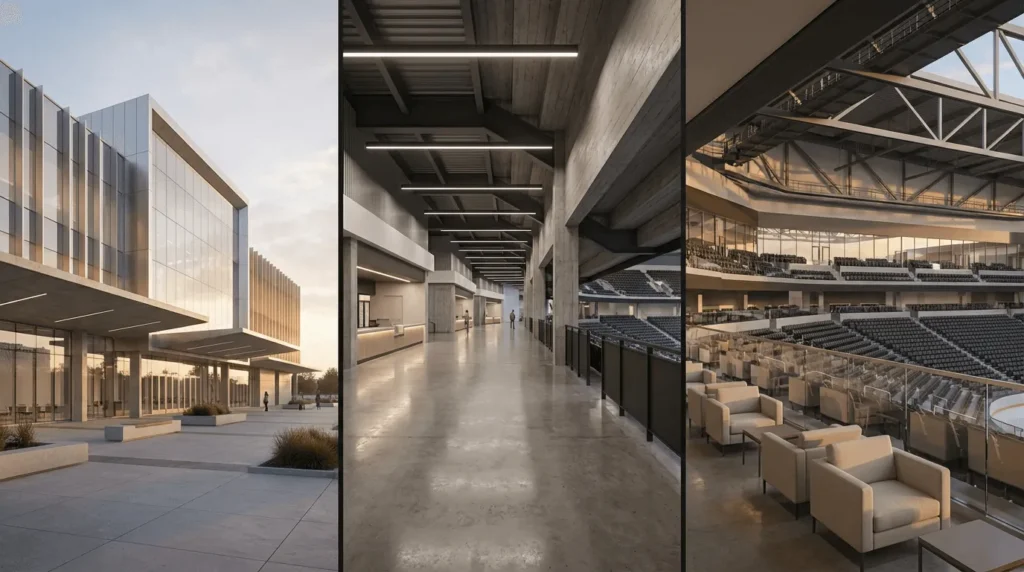
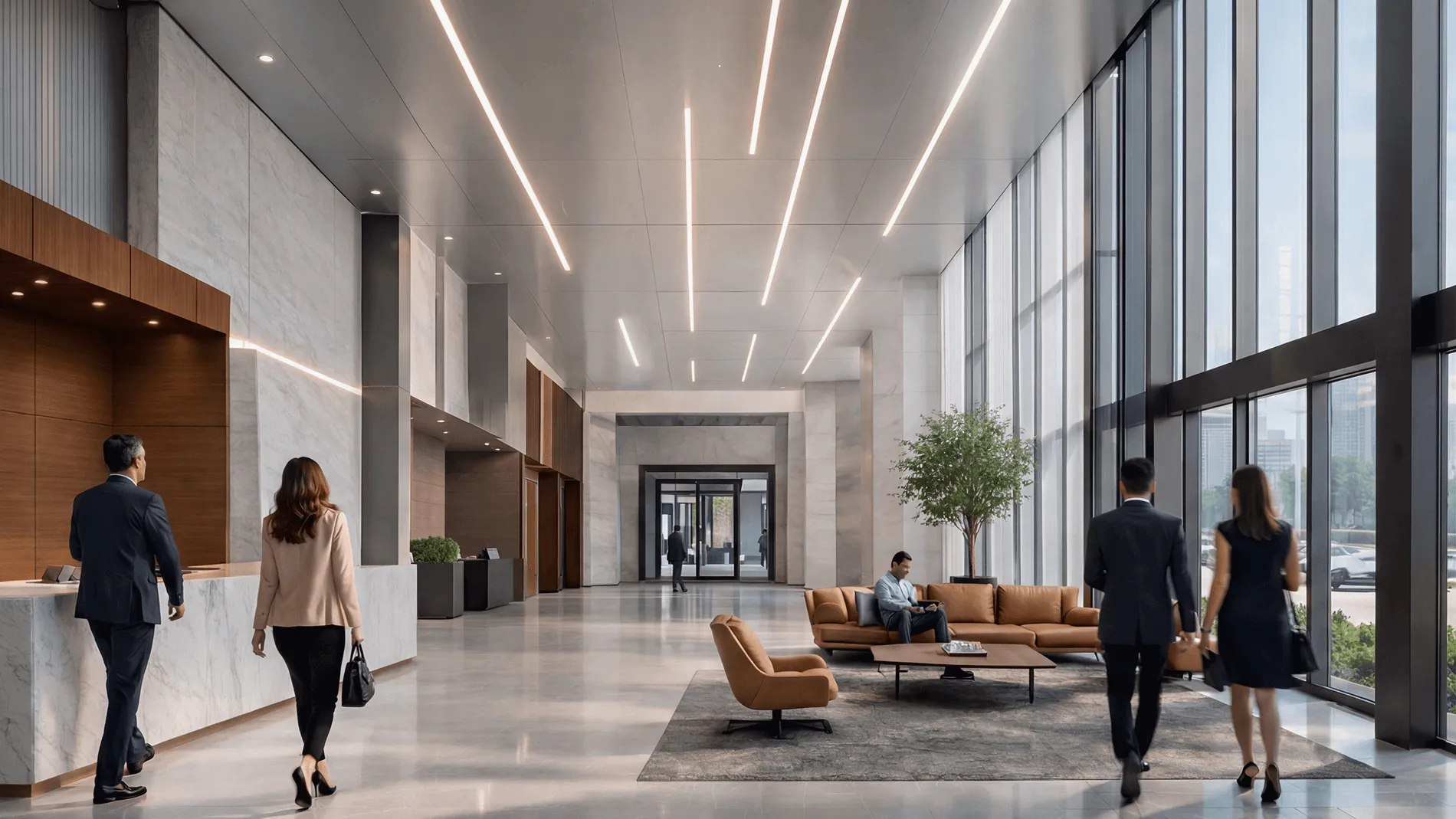
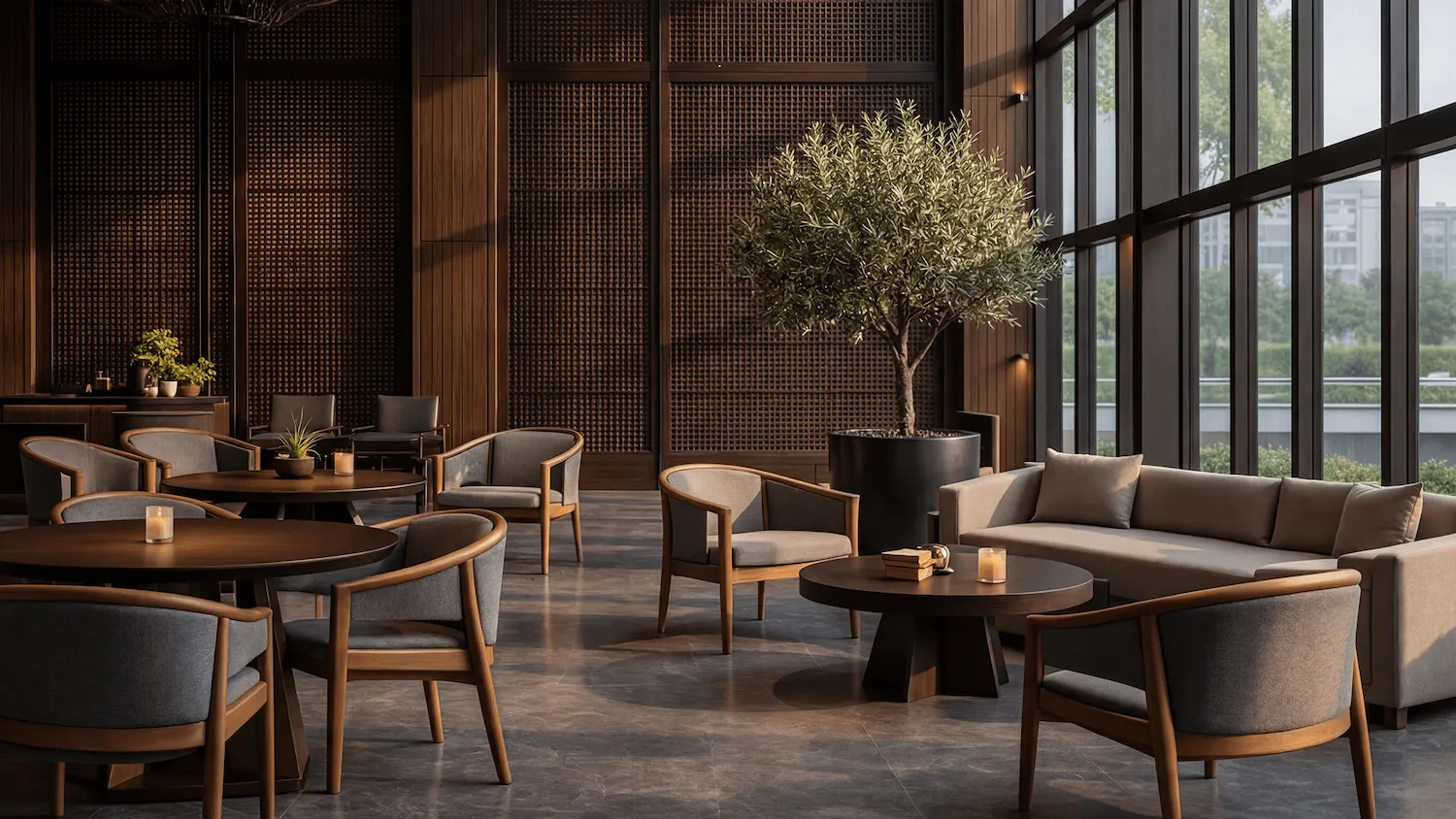
Securing buy‑in for an arena, training complex, or campus rec upgrade demands more than attractive images. Decision‑makers need to understand how a building will move crowds, manage light and sound, and deliver revenue across game day and non‑event operations. This is where rigorous visualization turns vision into evidence. For municipalities and universities, renderings are often used as public-facing materials that complement financial justifications and help communicate budget decisions to a broader audience. For sports facility design teams, they create a shared reference that reduces ambiguity before fabrication begins.
In sports architecture, each image serves as a visual approximation of real-world operational scenarios. Lines on the plan are not enough to convince a board that a concourse will clear at halftime, or that a training hall’s daylight will be usable during winter hours. A structured visualization workflow translates technical intent into a narrative that stakeholders can read in seconds.
The expectations are high. Sponsors look for branded touchpoints. Broadcasters check camera positions. Facility operators weigh maintenance and staffing implications. High-fidelity, disciplined imagery often supports faster decision-making and helps reduce the number of design iterations during reviews. That is the essence of high‑value sports visualization.
What makes sports facilities different in CGI terms
Sports buildings combine public assembly, broadcast needs, and complex event logistics. They are not just big boxes – they are living systems.
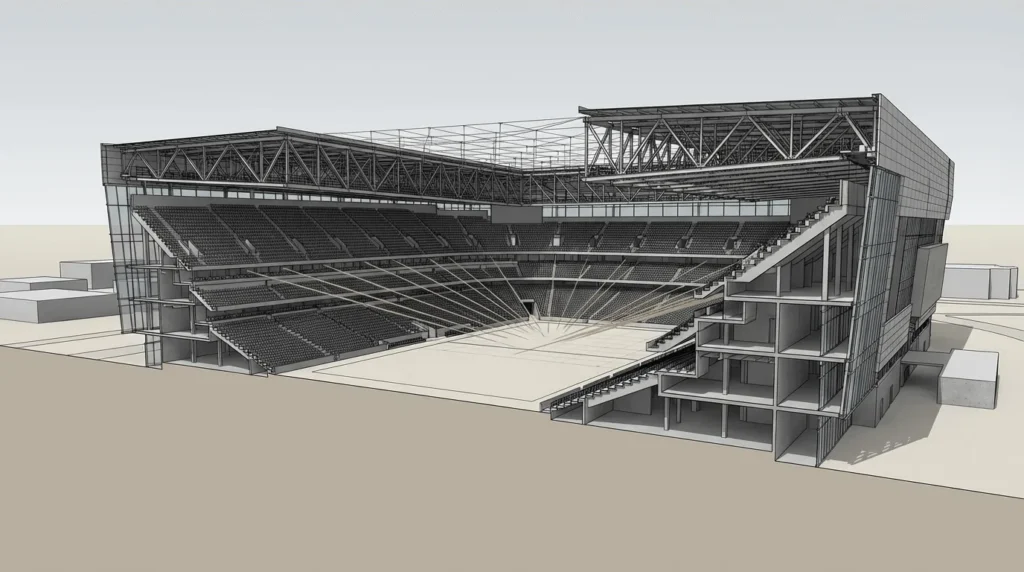
Scale and sightlines. The geometry driving a bowl, court, or track dictates everything from roof spans to acoustics. Camera positions must provide the spectator experience from nosebleeds to VIP loge.
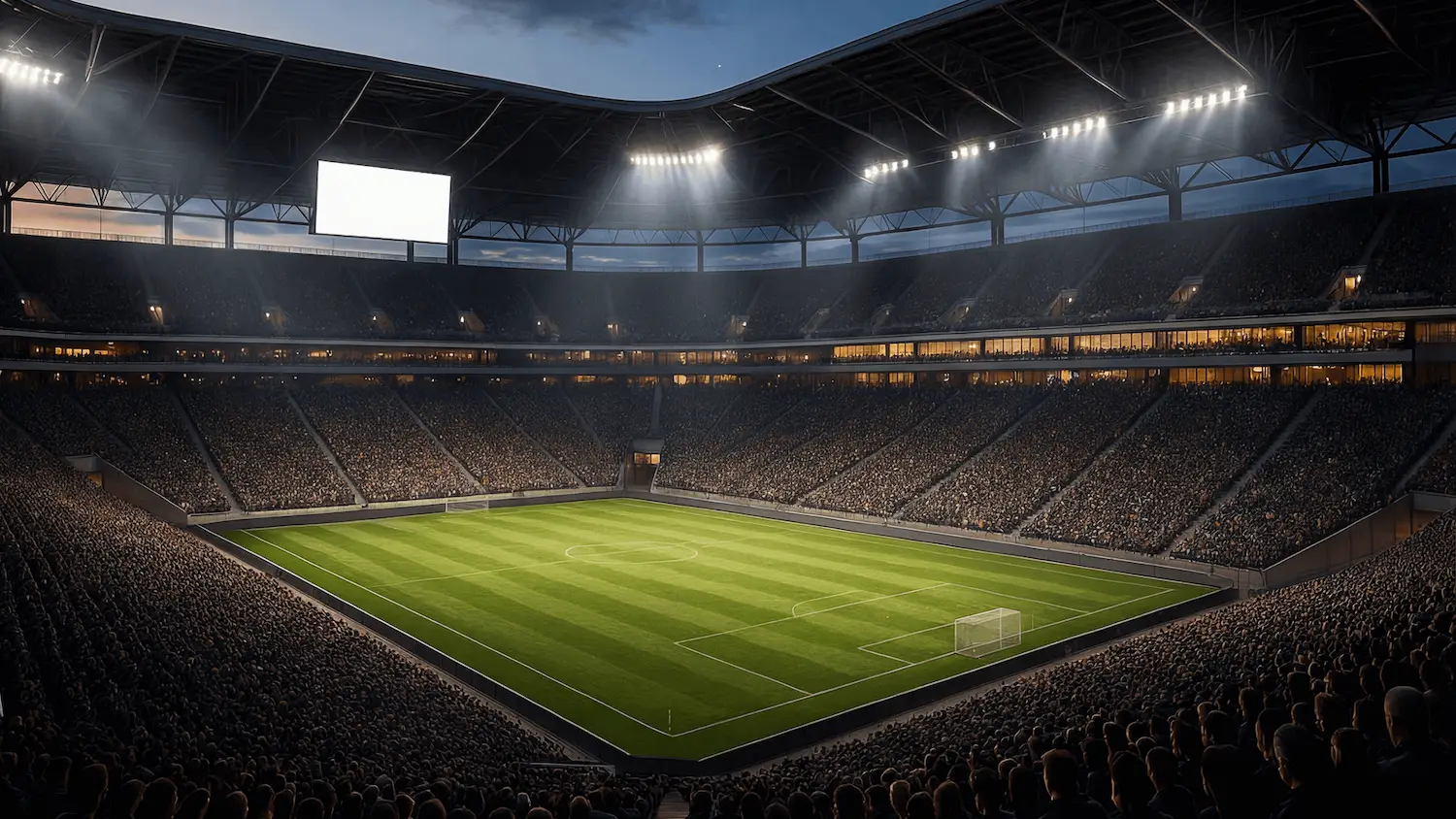
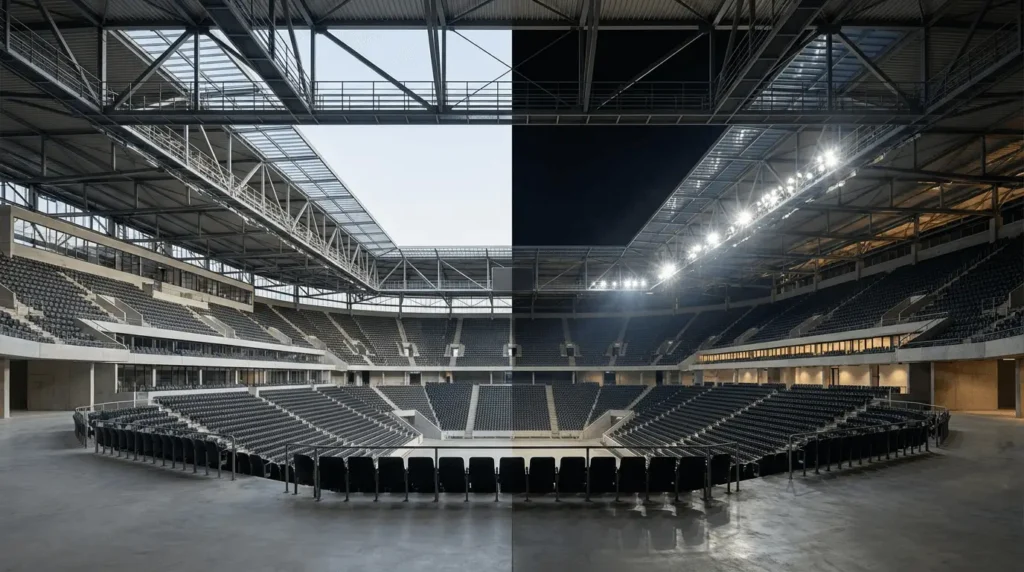
Environmental variability. Kickoff at midday and a 9 p.m. tip‑off demand different exposures and artificial lighting. Renderings must demonstrate lighting control strategies and show how glare management works with real materials.
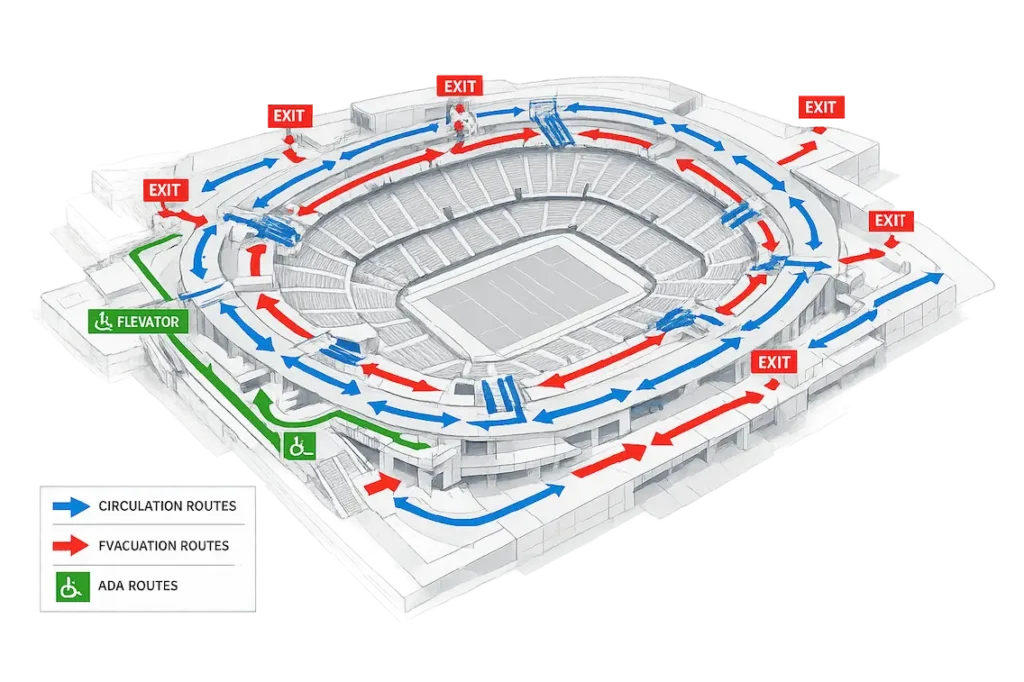
Flow and safety. Evacuation models, ADA routes, and service corridors should be legible in stills and animations. Visuals are most persuasive when they show how a plan keeps guests comfortable under peak loads.
Mixed use. Off‑season concerts, exhibitions, and community programs reshape operational assumptions. Imagery has to reflect that flexibility for commercial outcomes and civic value.
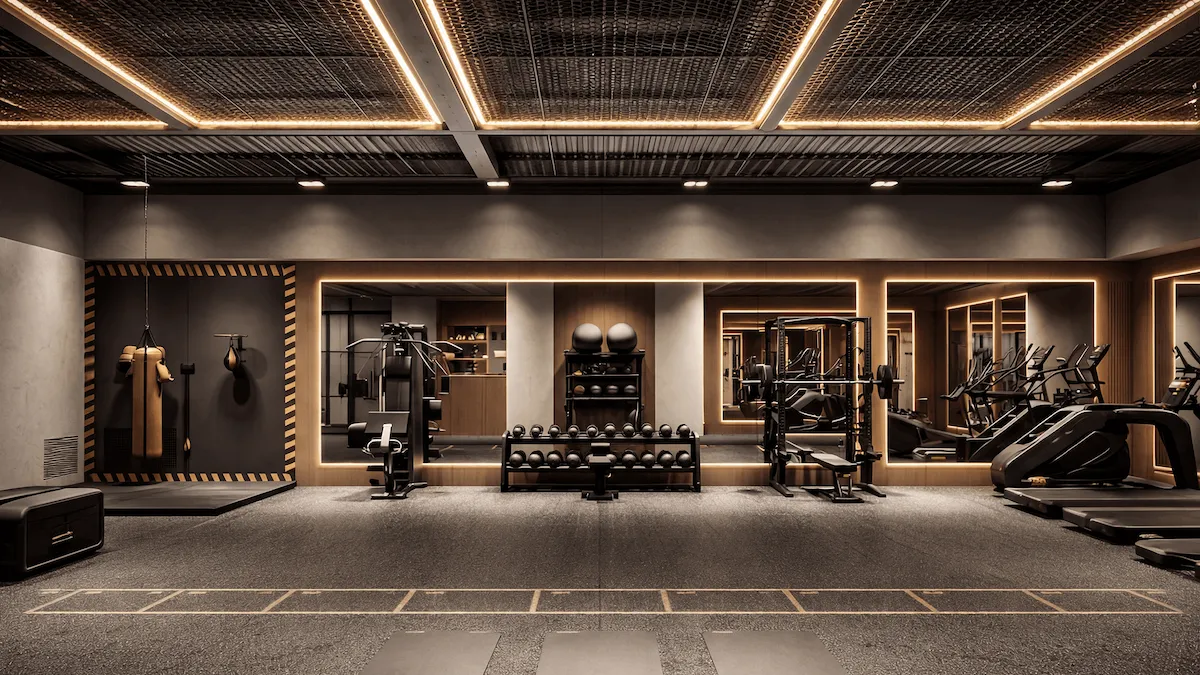
Training and participation venues add their own requirements. For indoor sports facility design, the right balance of daylight and artificial light affects performance metrics. Specialized flooring, netting, and equipment must be modeled accurately so coaches and operators can validate clearances. Locker rooms, hydrotherapy areas, and sports medicine suites need a level of material realism that withstands scrutiny from operations staff and consultants.
In all cases, the CGI must remain accountable to drawings and specifications.
Visual storytelling that persuades technical and non‑technical audiences
Great sports imagery does more than look real. It focuses attention on the decision at hand.
Start with a clear narrative arc
Every presentation benefits from a simple story: how the site is approached, what guests see first, how they navigate, and where revenue concentrates. A three‑to‑five‑image sequence can carry an entire pitch when composed intentionally. Begin wide, then tighten into high‑value moments like premium entries, sponsor activations, and fan amenities.
Compose for performance and emotion
Angles should confirm performance assumptions. If the target is acoustics and intimacy, show the bowl from the stage or court with the roof and seating geometry visible. If the goal is community integration, emphasize street‑level activation and public realm. In stadium renderings, we often pair broadcast‑style long shots with eye‑level scenes that capture the sensorial mix of light, material, and crowd energy.
Light with purpose
Day‑night pairs and seasonal variants are not decorative. They support conversations about glare, safety, and operational costs. Good lighting setups reveal the behavior of concrete, metal panel, ETFE, and timber under different conditions, helping teams validate specification choices.
Populate with authentic life
Spectators, athletes, staff, and vendors should match the demographic and activity level you expect. Merchandise, concessions, and sponsor placements must be realistic to avoid undermining trust. Small operational cues – open doors at service docks, correctly branded wayfinding, and queueing logic – demonstrate that the architecture is thought through.
Cost control and scope clarity
Budgets vary with model maturity, view count, and animation needs. As a rule of thumb, early concept packages cost less per image because materials and props are schematic. Details increase time. We keep scope efficient by focusing on the few views that carry the decision, then supporting them with targeted details rather than spreading effort across a large set of similar angles.
When your budget is fixed, we recommend allocating more to the images that lead the pitch and treating secondary views as supporting frames. Renders that validate a structural or operational risk often deliver outsized value because they prevent costly late‑stage changes.
Integrating training, wellness, and hospitality
Sports buildings now mix practice spaces with wellness, education, and hospitality programs. That convergence demands careful targeting in imagery. A performance lab might prioritize clarity and equipment realism. A VIP club needs atmosphere and material detail that reads premium in print and motion. Locker rooms and recovery areas must feel both robust and hygienic. By mapping views to audience and outcome, we avoid over‑polishing angles that will never carry the decision and under‑serving those that will.
When you combine athletics with cafés, retail, or coworking, your visualization must balance brand expression with operational clarity. That is where a photography‑informed eye – framing, lenses, and lighting that mimic how the space will be captured – makes the difference between a pretty picture and a persuasive presentation.
Briefing your partner effectively
Strong inputs equal strong outputs. Here is a concise brief that accelerates alignment and reduces revisions.
Primary objectives and success metrics for each image or animation, including the decision it should enable.
Latest BIM models, consultant markups, and a prioritized material schedule indicating which finishes are fixed vs. in play.
Seating counts, sightline targets, crowd density assumptions, and any broadcast or sponsorship requirements.
Wayfinding logic, security, and ADA routes, and operational constraints such as deliveries and egress.
Brand assets, signage hierarchies, and examples of the desired mood from built references or photography.
From stills to motion and immersive formats
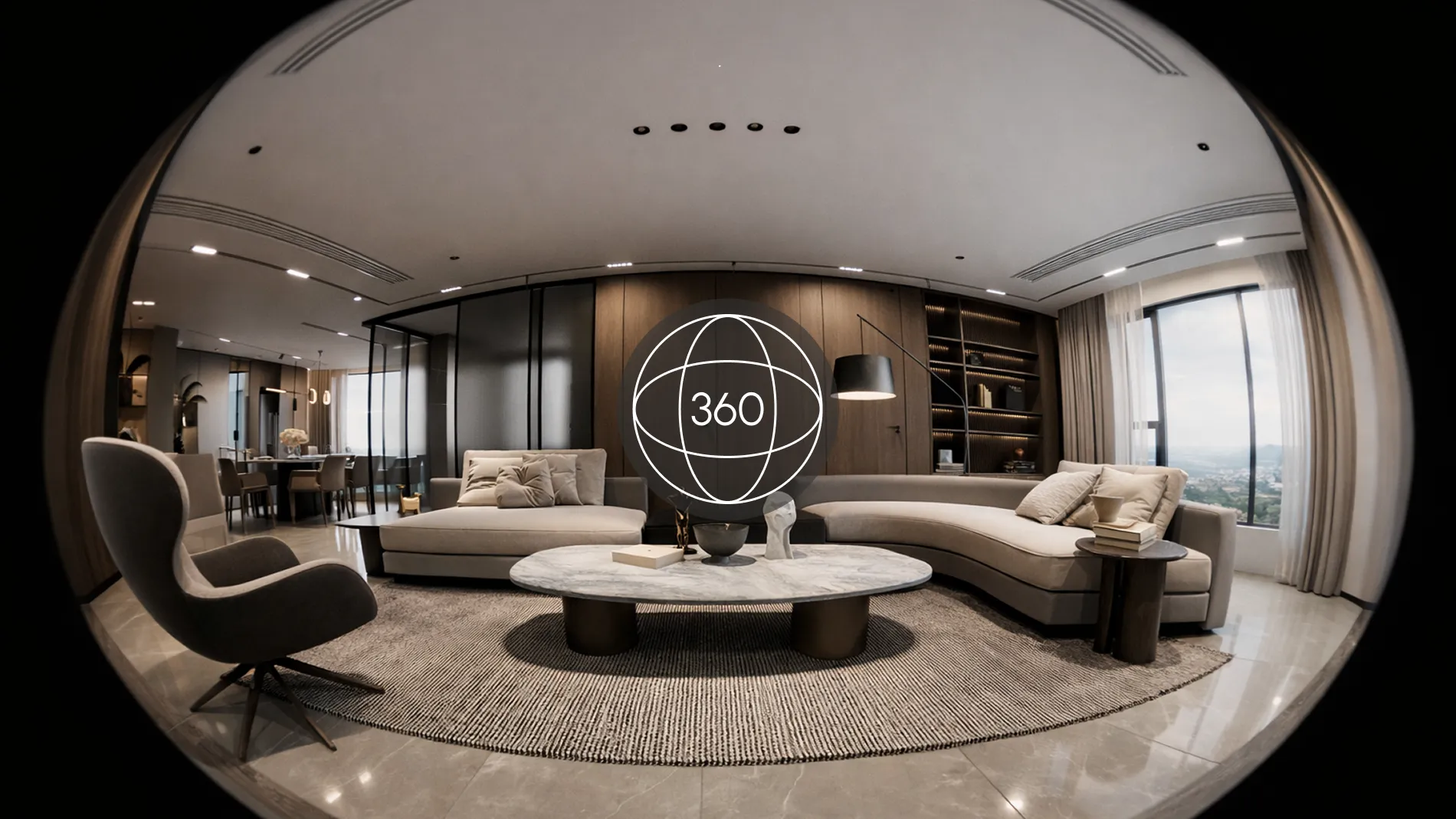
Different stakeholders absorb information differently. Stills are fast and effective for boards and public meetings. Short architectural animations can validate wayfinding, crowd management, and premium sequences from arrival to seat. 3D virtual tours put coaches, sponsors, and civic leaders in the driver’s seat to explore options without travel. Across formats, continuity of materials, lighting rigs, and entourage maintains credibility and reduces cognitive dissonance between deliverables.
GENENSE supports that continuum with a coherent pipeline. We start with a master scene that feeds stills, motion, and interactive outputs. That lowers cost and keeps your message consistent, whether you are presenting to a planning commission or negotiating suite sales.
How GENENSE aligns with your team
Our studio is built for B2B collaboration. We work with owners, architects, contractors, and operators who need reliable imagery tied to deliverables and dates. We engage early to shape a realistic plan for meetings and milestones, coordinate rigorously with BIM, and structure feedback to keep momentum. When a public process requires transparency, we assemble talking points and exhibits that map directly to the images.
If your portfolio blends practice spaces, arenas, and mixed‑use edges, we can scale from rapid option studies to full marketing suites. Our team is equally comfortable supporting planning approvals with restrained diagrams and delivering broadcast‑ready hero moments once design settles.
Service connections you can leverage
Because sports projects intersect with city life and hospitality, many clients combine renderings of streetscapes, concessions, and premium lounges with exteriors and bowls. GENENSE ties these together with the same photoreal standards you see in our 3D exterior visualization, interior visualization, architectural animation, and 3D virtual tour work. When products are bespoke – seating lines, lighting families, or concession equipment – our product rendering team builds accurate assets that look right from any angle and scale into motion without loss.
This integrated approach keeps your images coherent across channels. The same materials and lights that make stills feel real underpin animations and interactive outputs, avoiding the visual disconnect that can undermine trust.
Conclusion
Sports buildings are complex, public, and scrutinized from day one. The right imagery clarifies performance and emotion at once. GENENSE specializes in images that prove function and sell experience, whether you are upgrading a collegiate arena or expanding a private training network. If you need persuasive sports architecture visualization aligned to milestones and budgets, we would be glad to scope a package that meets your goals.
FAQ
We can begin from BIM files, 2D drawings, or even massing sketches, but the clearer the inputs, the faster we can hit usable fidelity. A minimal set includes the latest plans, elevations, sections, key materials, and a shot list listing the decision each image should support. If you have brand assets and signage standards, those help us keep messaging consistent across views.
We pin all notes to a shared review board and maintain a change log that maps comments to view updates. When a consultant moves an element or changes a material, we update the master scene first so all downstream images and motion clips inherit the correction. That avoids inconsistencies and prevents surprises when you compile decks.
Yes. Early packages tend to be more restrained, emphasizing clarity over spectacle for public meetings and approvals. Once decisions lock, we layer in atmosphere, crowds, and refined lighting for marketing and sponsor conversations, while keeping geometry and materials consistent so no image overpromises.
For a focused set of 6–10 stills based on a mature BIM, two to four weeks is typical. If models are early or you need multiple day‑night pairs, add time for studies and approvals. Motion work generally ranges from four to eight weeks, depending on duration and complexity. We can phase releases so you have useful material for interim milestones even on compressed schedules.
If you are planning new venues or refreshing existing facilities, let’s align on scope and milestones. GENENSE will translate your technical intent into images that clarify decisions, build consensus, and move your projects forward.
Rate article:
Nice
Average rating: 5 / 5
Vote count: 1
Denys Borozenets
CEO at GENENSE
Denys is the CEO of GENENSE Studio. His mission is to build an international community of passionate CGI professionals, where everyone can unlock their potential by creating high-end digital content that helps highlight any product on the global stage.
As a leader, he holds himself to the highest standard of responsibility - for both his own work and that of his team. For the members of GENENSE, responsiveness and open communication are the core values that drive their collective success.
Why corporate headquarters need visualization that goes beyond “nice pictures.” Corporate headquarters are not just workplaces – they are strategic assets. Executive floors host investor briefings, R&D labs sit next to agile neighborhoods, and client areas must perform as brand touchpoints while meeting stringent acoustic, security, and wellness criteria. In this setting, office interior rendering […]
Every restaurant negotiates the same tension: more seats increase potential revenue per square foot, yet higher density can erode guest comfort and lengthen service times. In practice, the right equilibrium is shaped by concept, local code, and operational choreography. Dining rooms compete with circulation, queuing, accessibility-code clearances (e.g., ADA in the U.S.), acoustic treatments, host […]
There are moments in architectural rendering when less truly is more. Early in a project, a dense, fully dressed scene can bury the core idea under textures, entourage, and decorative lighting. A simple architectural render keeps attention on massing, proportion, and the relationship of volumes. In other words, it expresses architectural intent with clarity. At […]
In fitness projects, the most expensive mistakes rarely come from finishes. They come from moving heavy equipment after construction has started, rebalancing HVAC because the cardio area runs hot, or discovering that barbell clearances clash with a column line. High‑stakes issues often hide in plain sight on plan views. Photoreal visualization brings those decisions forward, […]
Why lighting is the difference between images that inform and images that sell On any design project, light is the medium that reveals form, color, and texture – and the variable that most directly shapes client perception. At GENENSE, we treat illumination as a controlled experiment rather than a cosmetic tweak. Remember that lighting strongly […]
The success of real estate sales is strongly influenced by how a building is presented to potential buyers. 3D walkthrough animation and architectural flythrough are effective tools for remotely showcasing the advantages of a house. New development projects emerge daily, and both the primary and secondary markets are filled with new offers. Through high-quality architectural […]