Have you started working on a new project and need professional help? Developing an interior or exterior design project is a complex process that requires not only experience from a specialist but also meeting a deadline, having precise technical specifications, a contract, and the ability to work with clients. This is why architects and designers seek professional help to obtain high-quality 3d modeling work.
What choices do you have today? The simplest thing is to find an intelligent freelancer for 3d modeling. If you want a more professional but also more expensive approach, turn to a design studio or an in-house visualizer. However, before you proceed with your hiring, there are certain things you should know about these options so that you can decide which solution is best for you.
Pros and cons of hiring an in-house 3D visualizer
The 3D industry is very young and dynamic. Therefore, to succeed, a specialist must always be on top — undergospecialized trainingto master new tools and techniques. If you are ready to make 3d modelers for hire as a part of your company’s staff, you can succeed in the following way.
Advantages of cooperation
Constant availability and ease of communication. If a person is on staff and sitting in the next room, it is easy to communicate, make edits, and discuss project details. All questions are processed quickly and thoroughly.
Deep understanding of the specifics of the company and its goals. A person who has been working on a project for some time is already considered part of the company, understands its specifics, goals, how and what specialists work on, and produces good results as quickly and efficiently as possible.
Opportunity to learn and develop skills according to needs. The company has ample opportunities to train its employees and develop their skills according to design fashion trends. Therefore, you will likely get a skilled specialist who is highly knowledgeable in the area you are working on.
Request a quote
Possible shortcomings
High costs for salaries, training, and equipment: Any company is responsible for its full-time specialists, trains, pays for insurance and wages, and takes care of the work’s comfort and safety. This is beneficial only if projects are carried out one after another without downtime. Then, the company does not lose money.
Limited variety of projects: If a company specializes in interiors, then the in-house visualizer should not expect the development of more large-scale projects and broader opportunities.
Risks of staff outflow and uneven workload: If the workload is rough, a hired employee may not hold onto his workplace and seek a more profitable partnership. A company hires a new employee and spends time training and developing him repeatedly, leaving the company without proper visualization render for some time.
Also, a person who has been coming to the same office for several years and receives the same salary with a slight increase every six months may lose the incentive to do extraordinary things. A lot of work is needed to motivate such employees.
Pros and cons of hiring a freelance visualizer
A freelancer is a free worker who independently takes on an order that interests him. They do not depend on anyone; they are entirely involved in organizing space and working time, so it is easier to agree on a 3d product visualizer freelance cooperation effectively.
Advantages of Cooperation
Flexibility in choosing specialists and their skills. Freelancing is a fairly popular topic. Currently, many freelancers offer 3D rendering services, so finding one won’t be a problem. You can quickly and effortlessly find several candidates that meet your requirements for a project of any complexity.
Saving money. A freelancer will charge less for work with the same professionalism as a CGI studio. You can ask the designer for a discount, but the studio needs help because they must pay taxes, maintain the company, and pay the workers.
Possibility of attracting specialists for specific projects. This is another point to save. If you do an excellent job on your own and there is rarely a need to attract outside help, you can hire individual project specialists as needed rather than keeping them on your payroll all the time.
Deadlines. A freelancer (unlike a studio) does not have a clear work schedule, weekends, or calendar holidays, so that you can request a shorter period for the project, and a designer can work all night to complete the work faster.
Possible Shortcomings
Limited controllability: Unfortunately, full-time freelance collaboration involves taking an advance payment from the customer. Unscrupulous specialists then disappear, don’t get in touch, and don’t do the work. This process is difficult to control.
Missing deadlines: If a specialist simultaneously manages many projects, then it is likely that they will not be able to comply fully with short deadlines. If the freelance designer is ill or can’t work for some time for any other reason, then the work is wholly suspended.
Risk of delays and quality problems: Since only one person is working on the project, something can easily be missed, overlooked, or forgotten during the work. And if the designer is also new to the field, then natural mistakes await you.
Limited connection to the company and its values: A freelancer is not tied to a company and conducts his activities on a free flight. There is no need to try to keep up the brand, putting the entire company and its image at risk.
Pros and cons of working with an outsource studio
A 3D Rendering studio is a company that develops computer generated imagery for customer projects. Several specialists are on staff, each with their own area of responsibility. The task of the outsourced 3d animation studio is to benefit the customer by solving his primary need, which appeals to you as a customer.
Advantages of Cooperation
Significant experience and collective knowledge. The manager carefully selects employees, tests them, and then, based on the complexity of the tasks set by the customer, appoints a performer of appropriate qualifications to complete these tasks efficiently and on time.
Wide range of services and technical support. Like any company, an outsourced 3d rendering studio has a structure where each employee is assigned his place and functions. Here comes the consequence — each person has his competence and does not rush between tasks. In addition, modern studios have the most modern equipment at their disposal.
Professional quality control and deadlines. The design studio has a clear work schedule laid out in stages. By distributing tasks among the team, the risk of missing a deadline is reduced to zero, unlike working with a freelancer. Web studios care about their reputation and status, so they recruit only experienced specialists with a good portfolioand extensive work experience for their team.
Possible Shortcomings
High costs for art outsourcing studio services: The studio has fixed hourly rate pricing. It’s difficult to cut it down, but it’s possible.
Possible difficulties in communication and understanding needs: Since several people are working on the project, they must understand what the customer wants and work in the same direction. Sometimes, studio employees cannot come to a common opinion, leading the work to a dead end.
Less flexibility in choosing specialists. If the company is new and small, it may have a vague specialist with a narrow profile. Typically, large studios are well-staffed.
Let’s summarize
Freelancers are usually approached by small businesses or clients who want to save a lot. But be careful, and savings come with pretty high risk.
An internal visualizer’s absolute and most important advantage is that it is always at hand in the office. Managers do not worry that the designer is lost and cannot make urgent changes to the project. However, finding an excellent in-house specialist is challenging. They work, learn, and build a portfolio; their creative soul strives for more significant projects.
A reputable rendering studio, such as Genense, has full-time employees working under an agreement and brief, guaranteeing the customer that the project’s development will be completed with high quality and on time. Of course, the more complex the project, the higher its cost will be. Therefore, do not try to find a price much lower than the market — you may accidentally end up with a project that is not workable and has to be modified.
Request a quote
Rate article:
Nice
Average rating: 5 / 5
Vote count: 2
Denys Borozenets
CEO at GENENSE
Denys is the CEO of GENENSE Studio. His mission is to build an international community of passionate CGI professionals, where everyone can unlock their potential by creating high-end digital content that helps highlight any product on the global stage.
As a leader, he holds himself to the highest standard of responsibility - for both his own work and that of his team. For the members of GENENSE, responsiveness and open communication are the core values that drive their collective success.
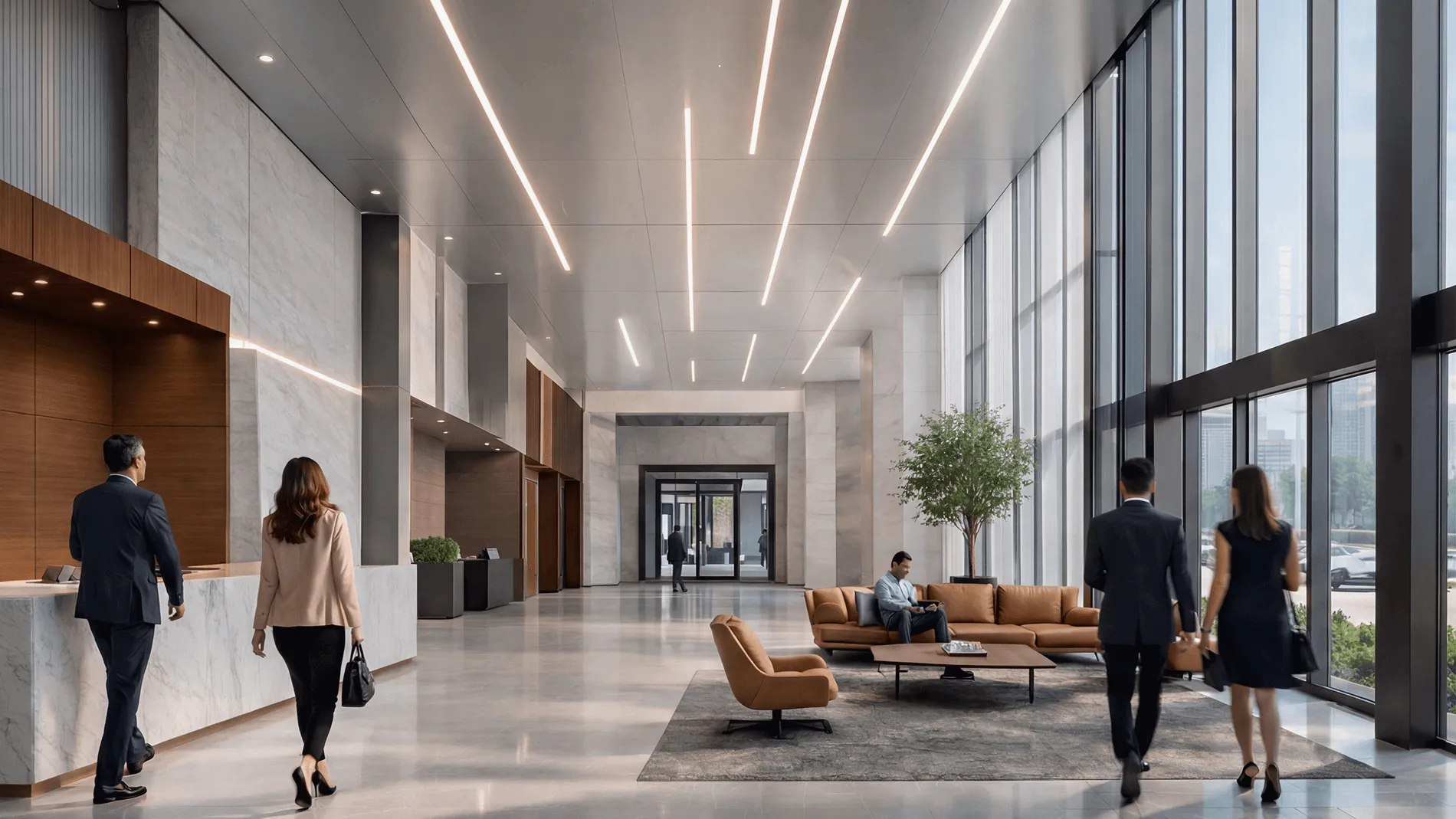
Why corporate headquarters need visualization that goes beyond “nice pictures.” Corporate headquarters are not just workplaces – they are strategic assets. Executive floors host investor briefings, R&D labs sit next to agile neighborhoods, and client areas must perform as brand touchpoints while meeting stringent acoustic, security, and wellness criteria. In this setting, office interior rendering […]
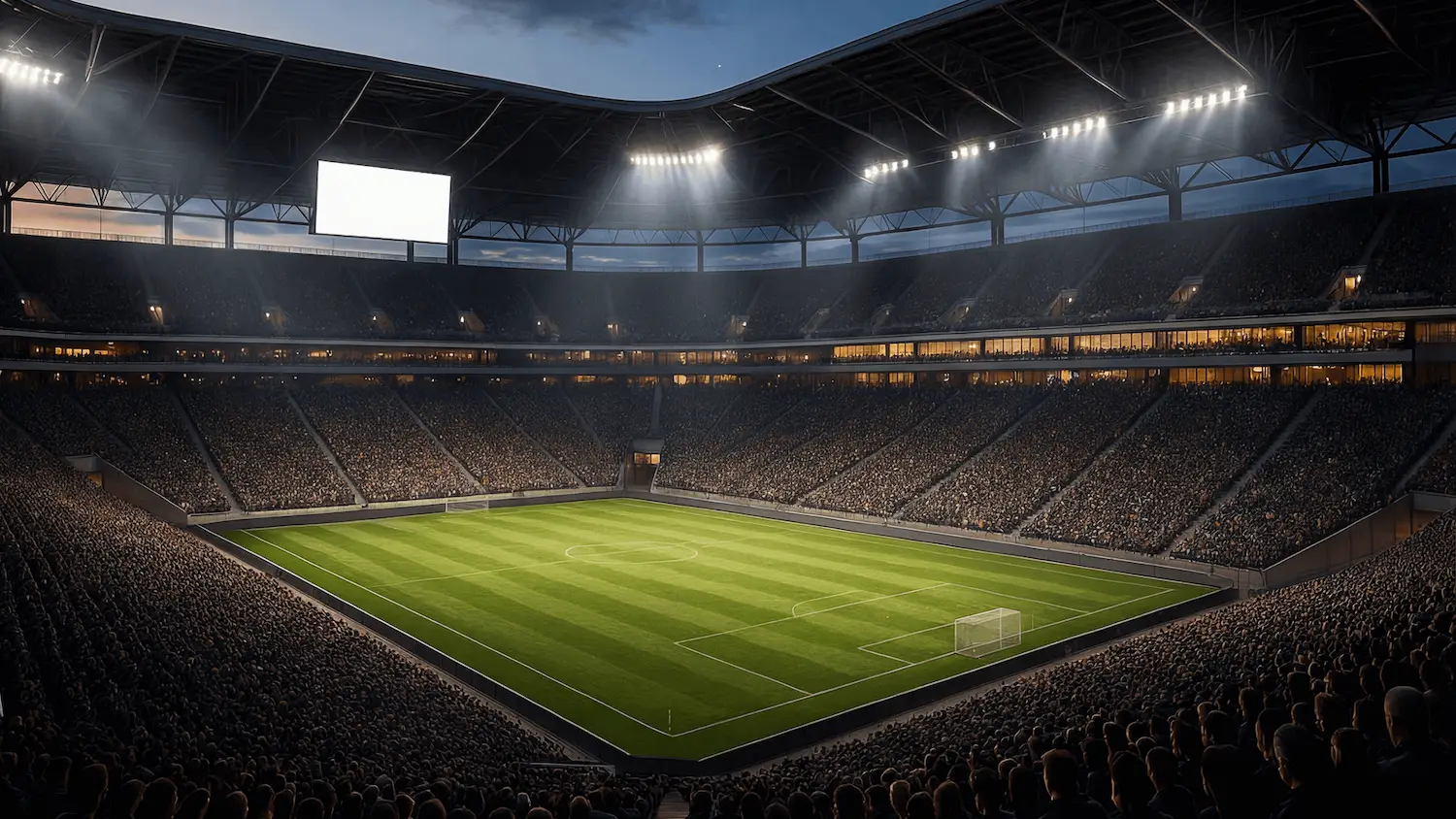
Why visualization makes or breaks a sports pitch Securing buy‑in for an arena, training complex, or campus rec upgrade demands more than attractive images. Decision‑makers need to understand how a building will move crowds, manage light and sound, and deliver revenue across game day and non‑event operations. This is where rigorous visualization turns vision into […]
Every restaurant negotiates the same tension: more seats increase potential revenue per square foot, yet higher density can erode guest comfort and lengthen service times. In practice, the right equilibrium is shaped by concept, local code, and operational choreography. Dining rooms compete with circulation, queuing, accessibility-code clearances (e.g., ADA in the U.S.), acoustic treatments, host […]
There are moments in architectural rendering when less truly is more. Early in a project, a dense, fully dressed scene can bury the core idea under textures, entourage, and decorative lighting. A simple architectural render keeps attention on massing, proportion, and the relationship of volumes. In other words, it expresses architectural intent with clarity. At […]
In fitness projects, the most expensive mistakes rarely come from finishes. They come from moving heavy equipment after construction has started, rebalancing HVAC because the cardio area runs hot, or discovering that barbell clearances clash with a column line. High‑stakes issues often hide in plain sight on plan views. Photoreal visualization brings those decisions forward, […]
Why lighting is the difference between images that inform and images that sell On any design project, light is the medium that reveals form, color, and texture – and the variable that most directly shapes client perception. At GENENSE, we treat illumination as a controlled experiment rather than a cosmetic tweak. Remember that lighting strongly […]