Why corporate headquarters need visualization that goes beyond “nice pictures.”
Corporate headquarters are not just workplaces – they are strategic assets. Executive floors host investor briefings, R&D labs sit next to agile neighborhoods, and client areas must perform as brand touchpoints while meeting stringent acoustic, security, and wellness criteria. In this setting, office interior rendering does something drawings cannot do alone: it turns intent into shared understanding across disciplines, speeds decisions, and reduces the risk of expensive late‑stage changes.
At GENENSE, we position visualization as part of the delivery chain for architecture and interiors, not an afterthought. When teams can evaluate material behavior, daylight, sightlines, and occupancy experience in photorealistic CGI, they make choices with confidence. That clarity travels from feasibility, through design development, to stakeholder approvals and pre‑leasing collateral – a single, coherent visual thread that connects concept to commissioning.
For global brands, the stakes are high. Headquarters set the tone for how clients, recruits, and media read the organization. That is why we align imagery with the specific demands of corporate headquarters architecture and design – scale, complexity, and consistent brand expression across multiple floors and programs – so your images do more than look good. They work hard on the project.
What makes headquarters different from standard workplaces
Headquarters must deliver on multiple agendas at once. Executive suites need gravitas without feeling isolated. Visitor journeys must be curated from the building lobby to the reception sequence, with security, privacy, and hospitality in balance. Specialist spaces such as boardrooms, studios, broadcast rooms, and all‑hands venues layer technical performance onto aesthetic expectations. Facilities teams require layouts that support growth and churn without undermining the brand narrative.
When the public face of the company is at stake, imagery must be exact. That means coordinated models, verified material references, and lighting setups that reflect real building orientation and glazing performance.
Where visualization adds the most value across the project timeline
Early concept
During strategy and block planning, stakeholders need to see spatial concepts, not just read adjacency matrices. We translate qualitative ideas into visual scenarios, allowing teams to compare workplace concepts side by side – a high‑touch client floor versus a more open, collaborative model – and discuss the operational trade‑offs using images rather than abstractions.
Design development
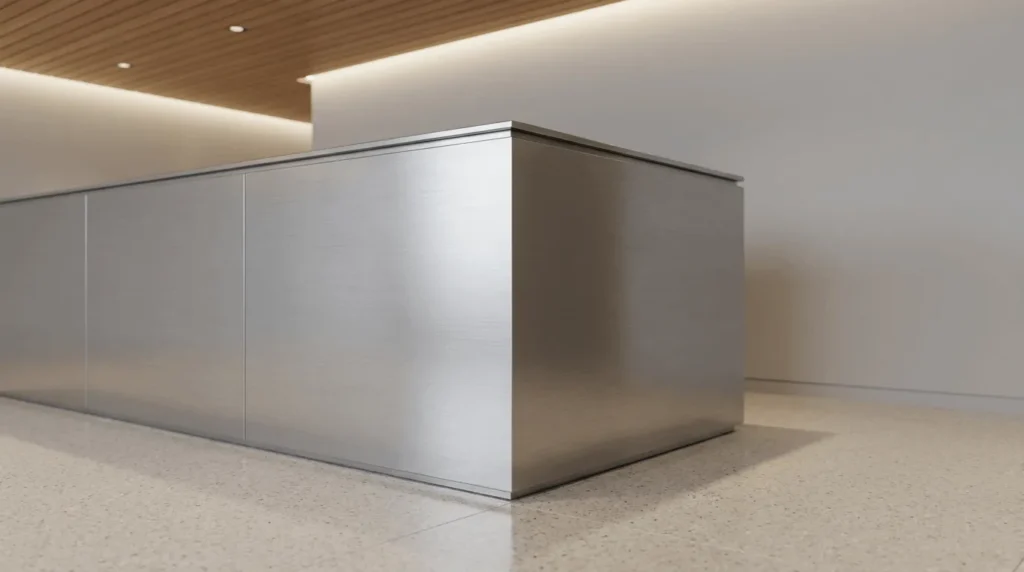
As specifications tighten, photoreal images validate material combinations and branded elements. We show how a micro‑terrazzo reads next to a brushed metal reception desk under 3500K lighting, how a timber slat ceiling interacts with sprinklers and linear diffusers, and how signage scales at view distance. This is also where we test camera angles for future marketing needs, ensuring you can reuse production assets later.
Approvals and procurement
Boards, city agencies, and landlord review panels respond faster to crisp visuals than to technical sheets. Rendered views clarify intent, reduce rounds of questions, and help procurement teams evaluate alternates without waiting for full mockups.
Launch and marketing
When the building is still a construction site, finished‑quality imagery supports talent acquisition, investor relations, and brand communications. Instead of relying on analogies or mood collages, your teams have accurate visuals for web, social, and press kits.
Typical deliverables that move the needle
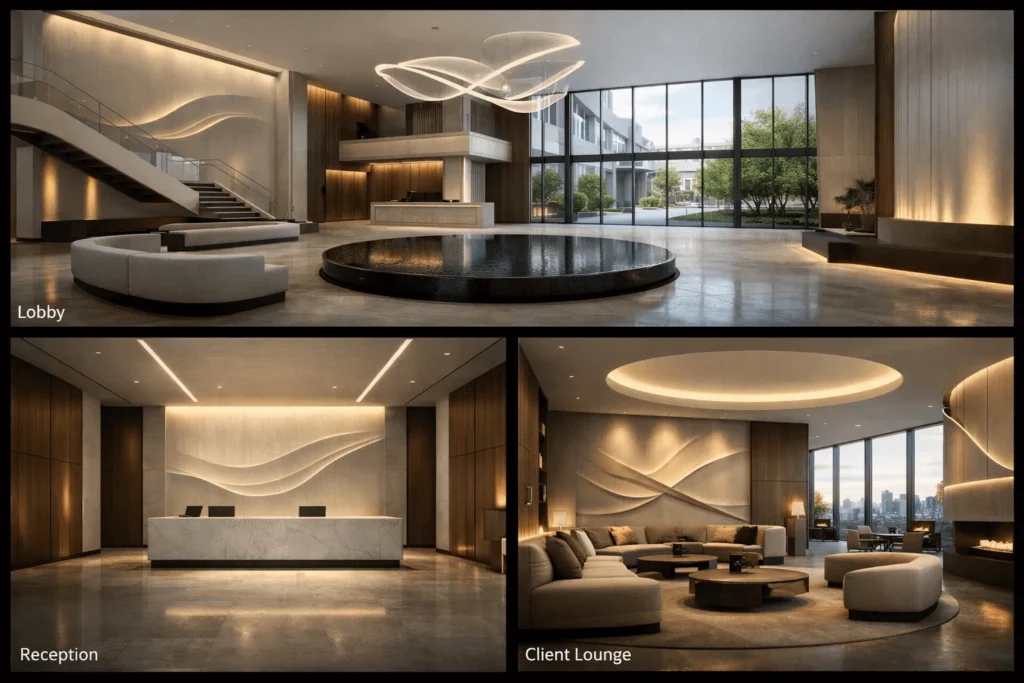
Photoreal stills of priority spaces – reception, client lounges, boardrooms, all‑hands, café hubs, library and focus zones, labs, and executive suites.
Animated sequences or short architectural films illustrating arrival, circulation, and space transformations over a day.
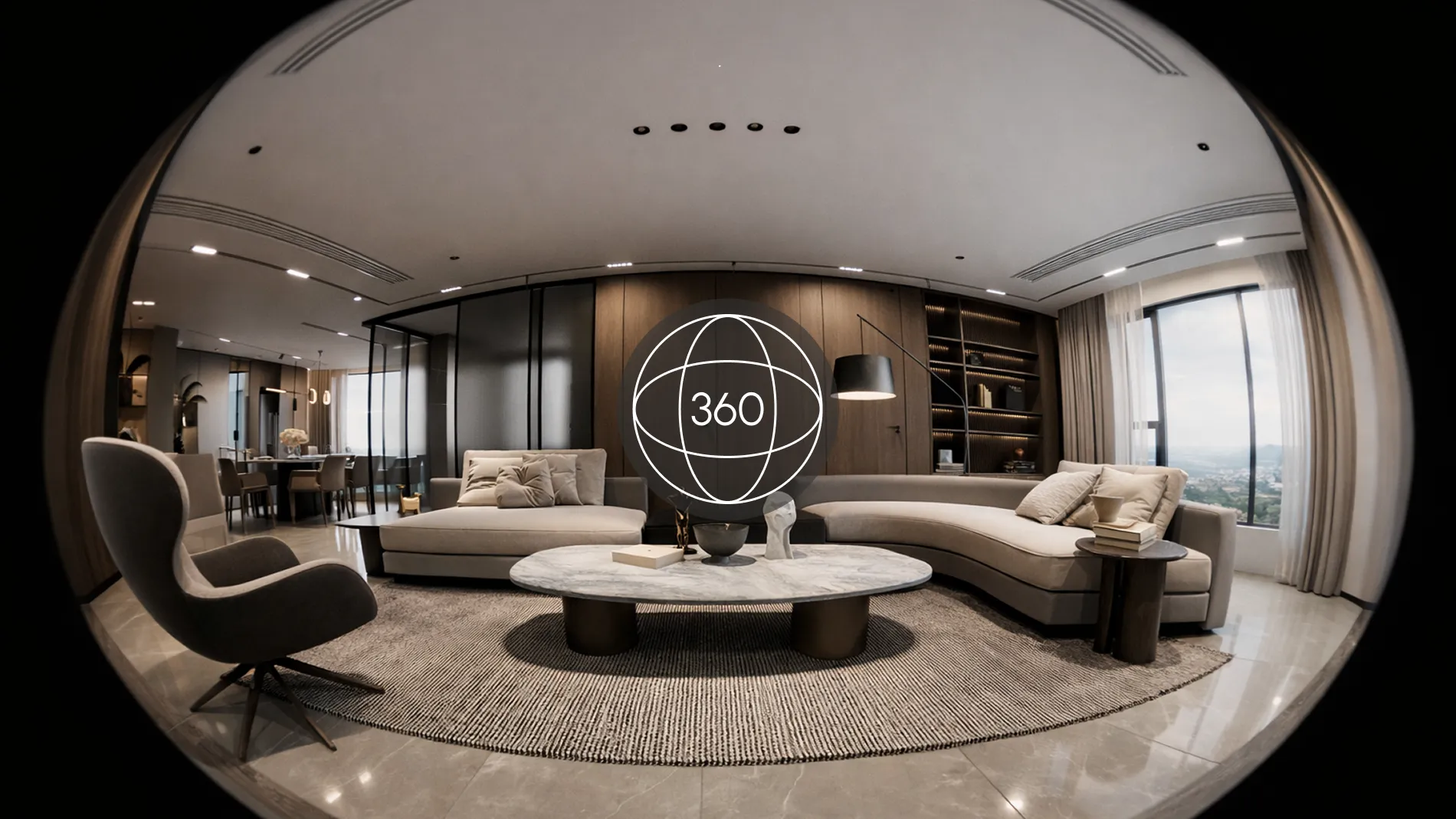
Interactive 3D views or 360 panoramas for virtual tours that support remote leadership reviews and early communications.
Material and lighting studies that compare finish sets, luminaire distributions, and branding treatments at presentation scale.
Photomontages that place new headquarters interiors into the real building shell for planning submissions or landlord coordination.
Branding made spatial – and how rendering proves it
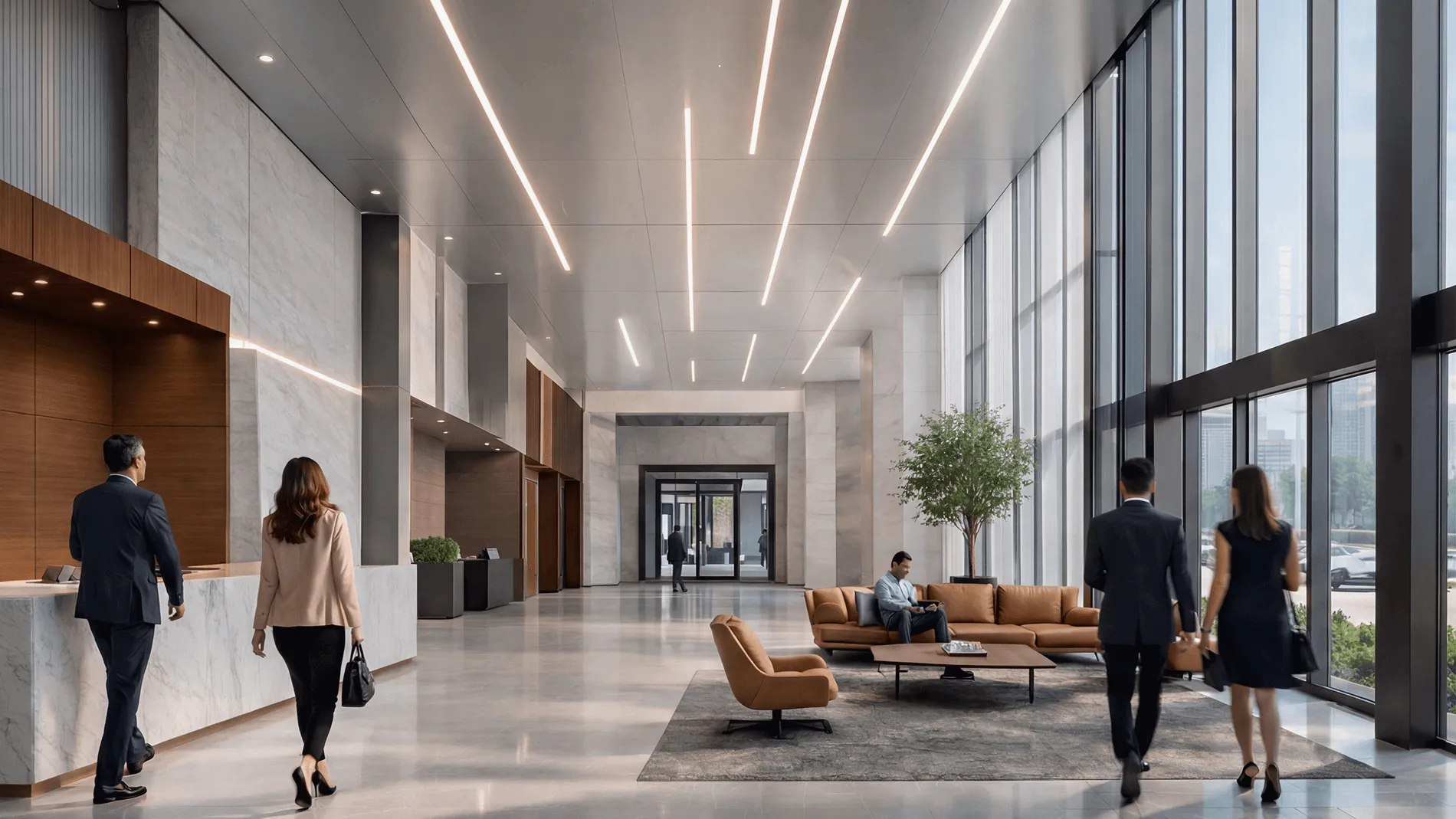
Brand is not only graphics on a wall – it is how a space feels, the pace of movement, the choice of materials, the tone of lighting, and the story told by details. For the headquarters, that narrative must be legible from the first step into the building lobby. Rendering makes these intangibles concrete by showing the whole sequence: the threshold experience, the reception line, the reveal of views and art, and the transition into client or staff areas.
When we model brand elements, we address both permanence and adaptability. A signature ceiling feature may be a long‑term investment, while digital canvases and modular furniture systems enable seasonal or campaign updates. Our images help evaluate that balance, ensuring the environment remains current without frequent capital spend.
We also treat identity as inclusive. Accessibility, neurodiversity, and well-being are not secondary checkboxes but part of brand integrity. Visualizations demonstrate how lighting avoids glare, how acoustics manage varied work modes, and how color and contrast support wayfinding. This approach turns brand values into practical, testable spatial outcomes.
Crucially, we integrate the language of your marketing and product teams. Visuals align with tone‑of‑voice, color references, and photography styles already present in your brand guidelines. This ensures consistency from a website hero image to the experience of the physical environment on opening day.
To connect these disciplines explicitly, we often frame reviews in terms of interior branding and how it translates to materials, typography in space, and digital content surfaces. The conversation becomes richer and more precise than generic style talk.
From governance to go‑to‑market: images that persuade
Governance processes for major projects demand clear evidence. Renders make complex proposals understandable to non‑technical executives and public bodies. Beyond approvals, the same assets can be adapted into launch communications and recruitment content. Here, office design 3D rendering becomes a marketing tool as much as a design aid, keeping visual language consistent across internal and external audiences.
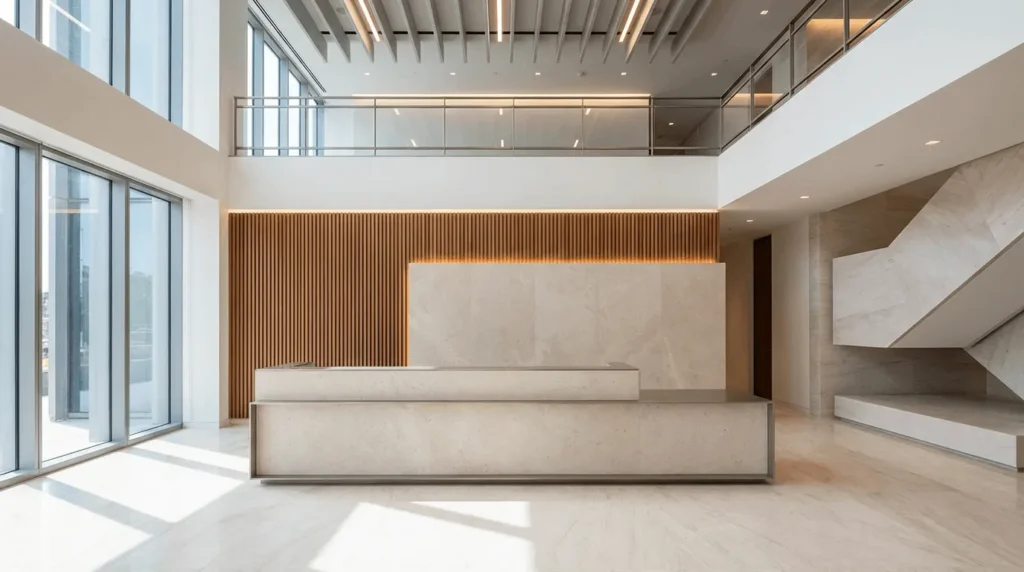
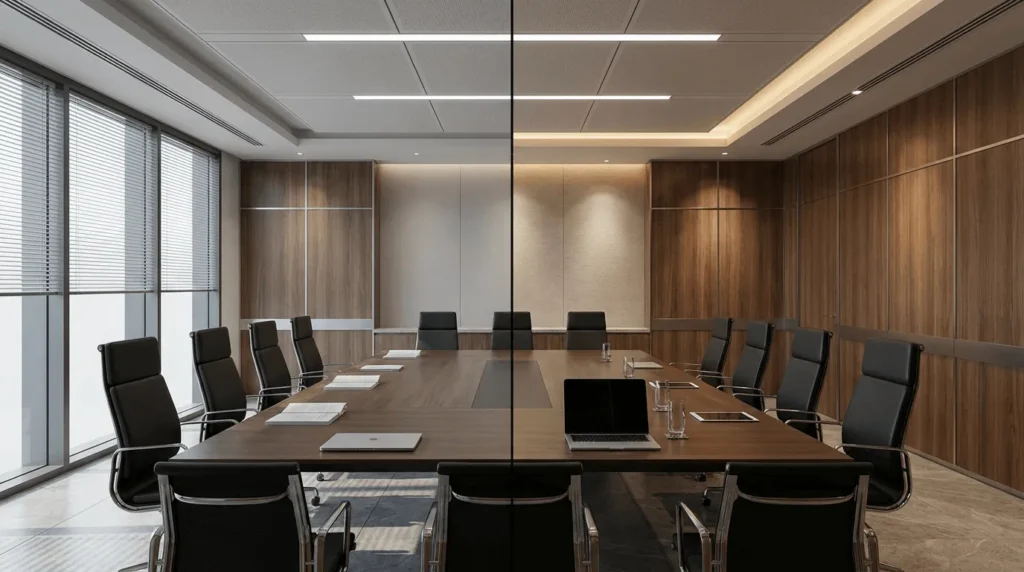
Client‑facing areas deserve special attention. Reception and boardroom renders should reflect the emotional cadence of a visit – anticipation, welcome, focus, and closure. Café and event spaces often serve double duty as town‑hall venues or press sets. Visualizing furniture reconfigurations and AV sightlines prevents surprises when the first major gathering takes place. For multi‑tenant buildings, layered imagery can also illustrate landlord rules while differentiating your floors through tone, materiality, and art.
To support brand teams, we prepare crops and ratios tailored to web, social, and large‑format print. We can integrate motion graphics or subtle particle effects into animations to align with the company’s broadcast identity – a seamless bridge between physical design and digital storytelling.
Aligning brand and design without compromise
Many organizations treat brand and workplace as separate streams. The most successful headquarters do not. We invite marketing and communications into key reviews, translating guidelines into spatial decisions – from hierarchy of signage to content zones and color blocking. When collaboration is structured, the result is not a themed set but a credible environment that expresses who the company is and how it works.
This is where branding and interior design intersect most productively. Our role is to visualize the point where material honesty meets brand narrative, so decisions balance authenticity, durability, and cost. By testing scenarios in CGI, teams avoid over‑investing in permanent features that date quickly and under‑investing in moments that matter most.
What you need to begin – and why it saves time
Confirmed camera list with priorities, ideally mapped to stakeholder needs and upcoming meetings.
Latest floor plans, RCPs, and finish schedules, plus any brand and signage guidelines that affect spatial expression.
Furniture and lighting selections or alternates, with manufacturer links or cut sheets for accurate material and scale.
Narrative goals for each space – who uses it, at what time of day, and what outcome the render should support.
Providing this information upfront avoids rework, shortens rounds of comments, and produces imagery that aligns with the story you need to tell at each stage.
Schedules and commercial parameters you can plan around
Timelines depend on scope, but a typical set of hero views for a single floor can be produced in roughly one to two weeks, with larger multi‑floor packages delivered in phased drops so leadership can review progressively. Animation schedules scale with length and complexity, often running a few additional weeks to accommodate storyboarding, camera choreography, and sound. Pricing is tied to the number of views, the detail level, and the presence of custom assets or heavy coordination.
How GENENSE extends value beyond the open date
Because we build accurate environments, the same assets can evolve into wayfinding prototypes, digital twin textures, or motion content for brand films. If your organization plans to roll out standards to regional offices, we can adapt the headquarters palette into scalable kits, using the original CGI as an authoritative reference. For ongoing communications, we can refresh images seasonally with updated artwork or campaign messaging, preserving the investment in core models.
If you need exterior context for leadership presentations, we integrate interior views with architectural photomontage and skyline studies, connecting your office floors to the identity of the building and city. For executive roadshows, we create concise animation cuts that travel well in slide decks and event screens, keeping color and motion language consistent with marketing output.
Choosing the right partner for headquarters work
Headquarters are unforgiving projects – complex programs, demanding stakeholders, and immovable launch dates. You want a visualization team that understands how corporate environments are built and used. GENENSE works with architects, interior designers, developers, and brand teams on large, multi‑phase projects, with workflows that fit professional delivery rather than consumer one‑offs. We speak the language of submittals, value engineering, and governance calendars, and we know that an image is only useful if it is accurate, on time, and aligned with the story you are telling to your leadership and the market.
If you are evaluating partners, ask about their approach to coordination with BIM, their material calibration process, and how they manage feedback across many stakeholders. Request examples where imagery supported actual decisions – not just gallery shots. This is the standard we set for ourselves and encourage clients to apply across the industry.
For teams who need an end‑to‑end visual package, we can combine stills with architectural animation and interactive 360s, building a cohesive set that covers approvals, internal communications, and launch marketing. When required, we deliver variant views that reflect alternates under consideration, preserving decision history for audit and governance.
Bringing it all together
Headquarters are statements of identity and tools for work. The right visualization partner helps you prove both. At GENENSE, we build images that carry through the life of a project – from early concepts to the opening press release – connecting teams and compressing decision cycles. If you are planning a new executive floor, re‑stack, or full campus consolidation, we can assemble a package that aligns with your governance dates and communication goals. Explore our Interior Visualization, Architectural Animation, 3D Virtual Tours, and Photomontage capabilities to see how they fit into your program, then contact us to scope a set tailored to your priorities.
To close the loop on search intent and clarity, this article has used key terms exactly where they matter. If your project requires deep coordination and consistent output, our office interior rendering services can be configured to support your process from concept to commissioning.
FAQ
Headquarters imagery must synthesize brand, security, technology, and workplace strategy across large floor plates and multiple programs. The renders are scrutinized by executive stakeholders and used for governance and marketing, so the bar for accuracy is higher. We integrate models from architecture and engineering, align with brand guidelines, and stage scenes to reflect real occupancy and event scenarios rather than isolated vignettes.
We can begin with schematic plans and a finish intent, but quality rises with better inputs. BIM exports, finish schedules, and confirmed furniture and lighting selections allow us to calibrate materials and lighting correctly. We also request brand assets so the spatial identity reads consistently. When the scope is still fluid, we set flexible camera lists that can pivot as priorities change.
Yes. We regularly sign NDAs and establish closed sharing environments. We can strip logos or placeholder brand elements during early reviews and apply final identity only when cleared by your communications team. If required, we can generate redacted sets for external approvals while maintaining a full internal series for leadership.
For leadership and board decks, we supply high‑resolution stills and thoughtfully composed crops. For marketing, we can provide images in ratios optimized for web and social, as well as short animation cuts suitable for events and press. If you plan to host remote walk‑throughs, interactive 360s provide an effective, bandwidth‑friendly option.
Rate article:
Nice
Average rating: 5 / 5
Vote count: 1
Denys Borozenets
CEO at GENENSE
Denys is the CEO of GENENSE Studio. His mission is to build an international community of passionate CGI professionals, where everyone can unlock their potential by creating high-end digital content that helps highlight any product on the global stage.
As a leader, he holds himself to the highest standard of responsibility - for both his own work and that of his team. For the members of GENENSE, responsiveness and open communication are the core values that drive their collective success.
Why visualization makes or breaks a sports pitch Securing buy‑in for an arena, training complex, or campus rec upgrade demands more than attractive images. Decision‑makers need to understand how a building will move crowds, manage light and sound, and deliver revenue across game day and non‑event operations. This is where rigorous visualization turns vision into […]
Every restaurant negotiates the same tension: more seats increase potential revenue per square foot, yet higher density can erode guest comfort and lengthen service times. In practice, the right equilibrium is shaped by concept, local code, and operational choreography. Dining rooms compete with circulation, queuing, accessibility-code clearances (e.g., ADA in the U.S.), acoustic treatments, host […]
There are moments in architectural rendering when less truly is more. Early in a project, a dense, fully dressed scene can bury the core idea under textures, entourage, and decorative lighting. A simple architectural render keeps attention on massing, proportion, and the relationship of volumes. In other words, it expresses architectural intent with clarity. At […]
In fitness projects, the most expensive mistakes rarely come from finishes. They come from moving heavy equipment after construction has started, rebalancing HVAC because the cardio area runs hot, or discovering that barbell clearances clash with a column line. High‑stakes issues often hide in plain sight on plan views. Photoreal visualization brings those decisions forward, […]
Why lighting is the difference between images that inform and images that sell On any design project, light is the medium that reveals form, color, and texture – and the variable that most directly shapes client perception. At GENENSE, we treat illumination as a controlled experiment rather than a cosmetic tweak. Remember that lighting strongly […]
The success of real estate sales is strongly influenced by how a building is presented to potential buyers. 3D walkthrough animation and architectural flythrough are effective tools for remotely showcasing the advantages of a house. New development projects emerge daily, and both the primary and secondary markets are filled with new offers. Through high-quality architectural […]