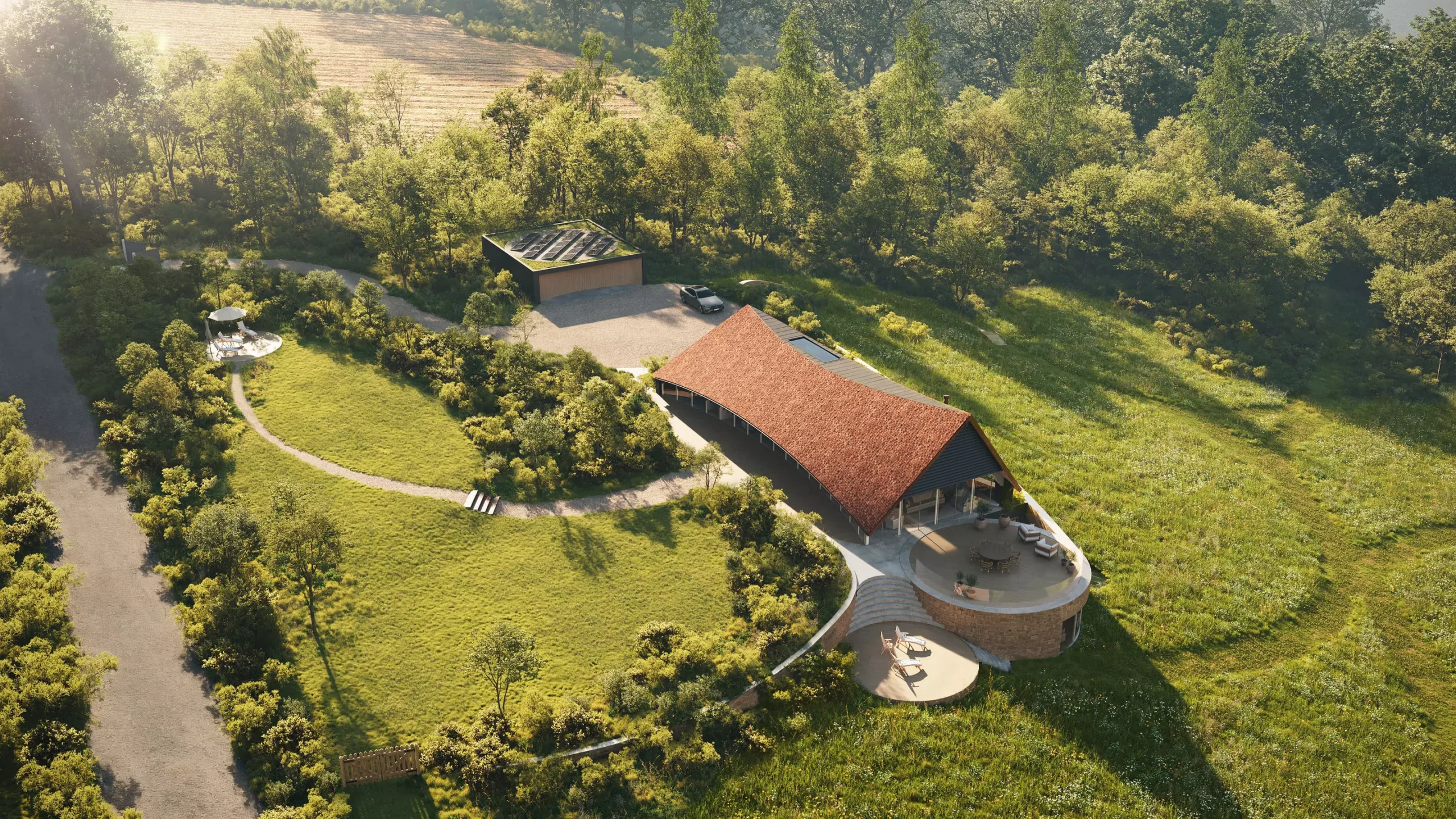
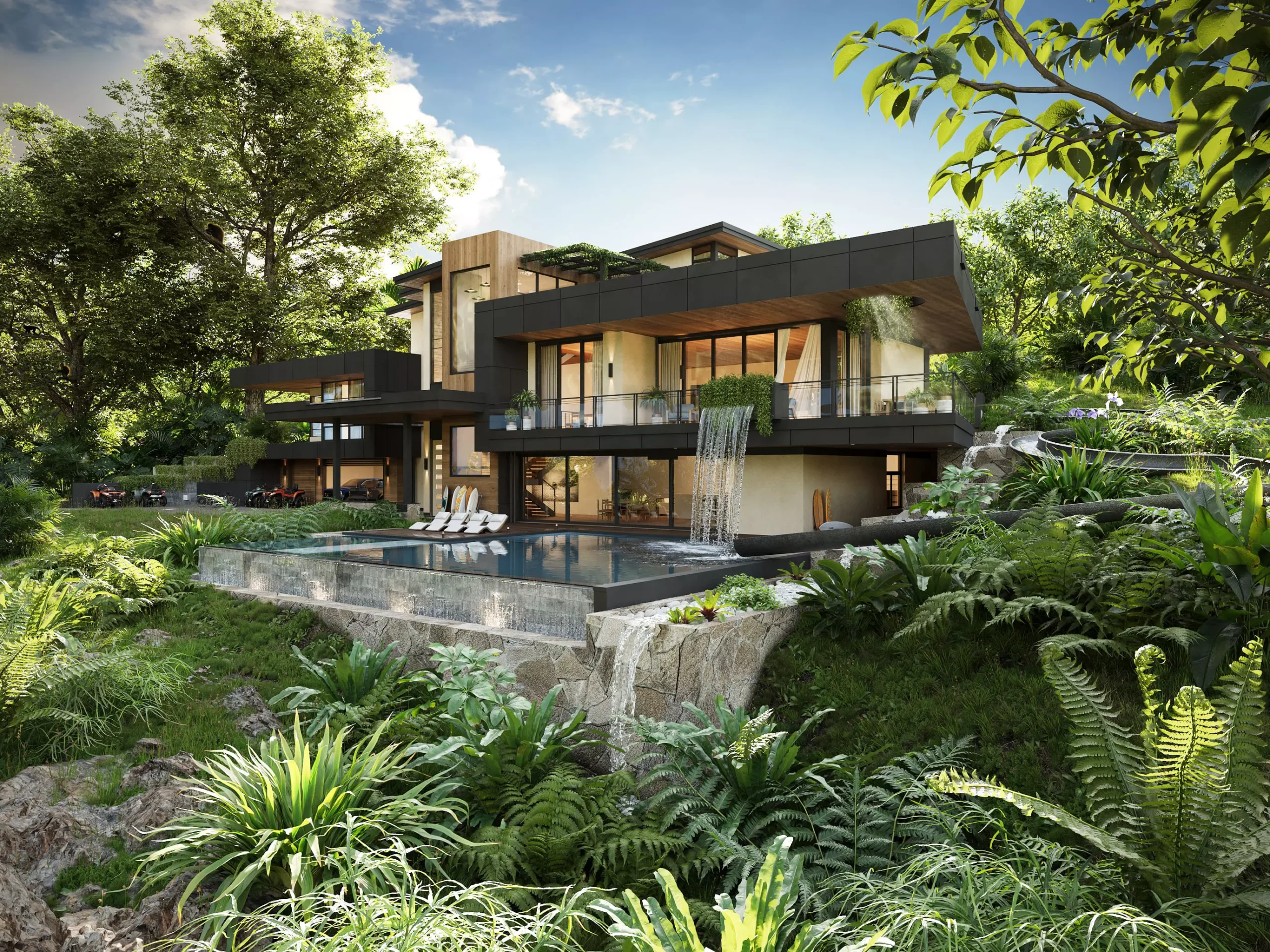
3D residential rendering is the process of producing photorealistic CGI images, animations, or interactive scenes that depict a proposed or existing home with accurate geometry, materials, lighting, and landscape context.
For architects, interior designers, developers, and construction managers, these visuals translate drawings and BIM data into decision-ready imagery that clarifies design intent, supports planning approvals, and accelerates marketing. As a 3D residential rendering company, GENENSE structures production around professional workflows – from concept iterations to sales collateral – ensuring predictable timelines, measurable impact, and stakeholder alignment across design and pre‑sales.
Request a 3d residential rendering quote
Types of residential renderings and when to use them
3D visuals are not one-size-fits-all. Selecting the right deliverable depends on the project stage, audience, and the specific decision you need to unlock.
Exterior stills
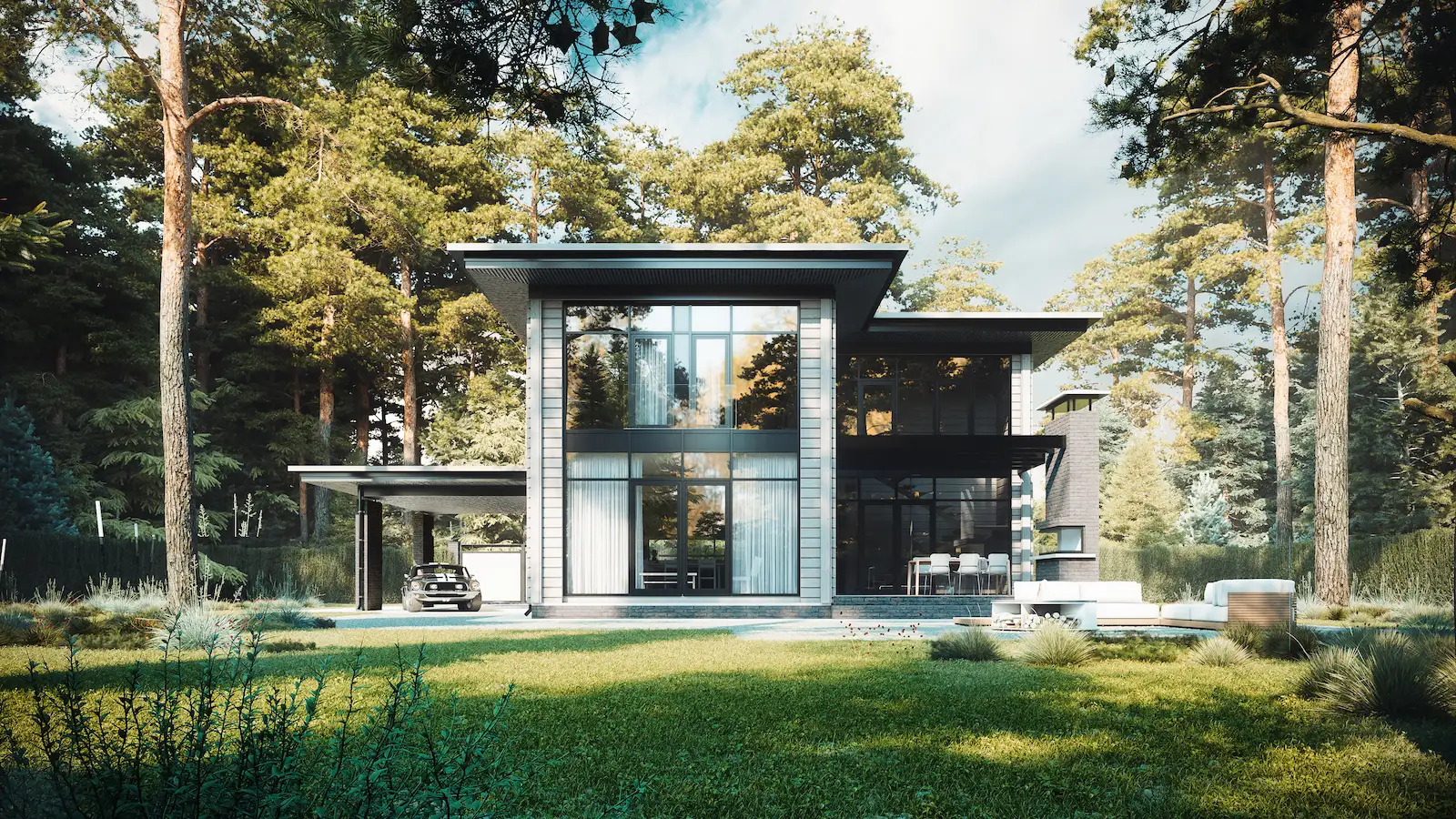
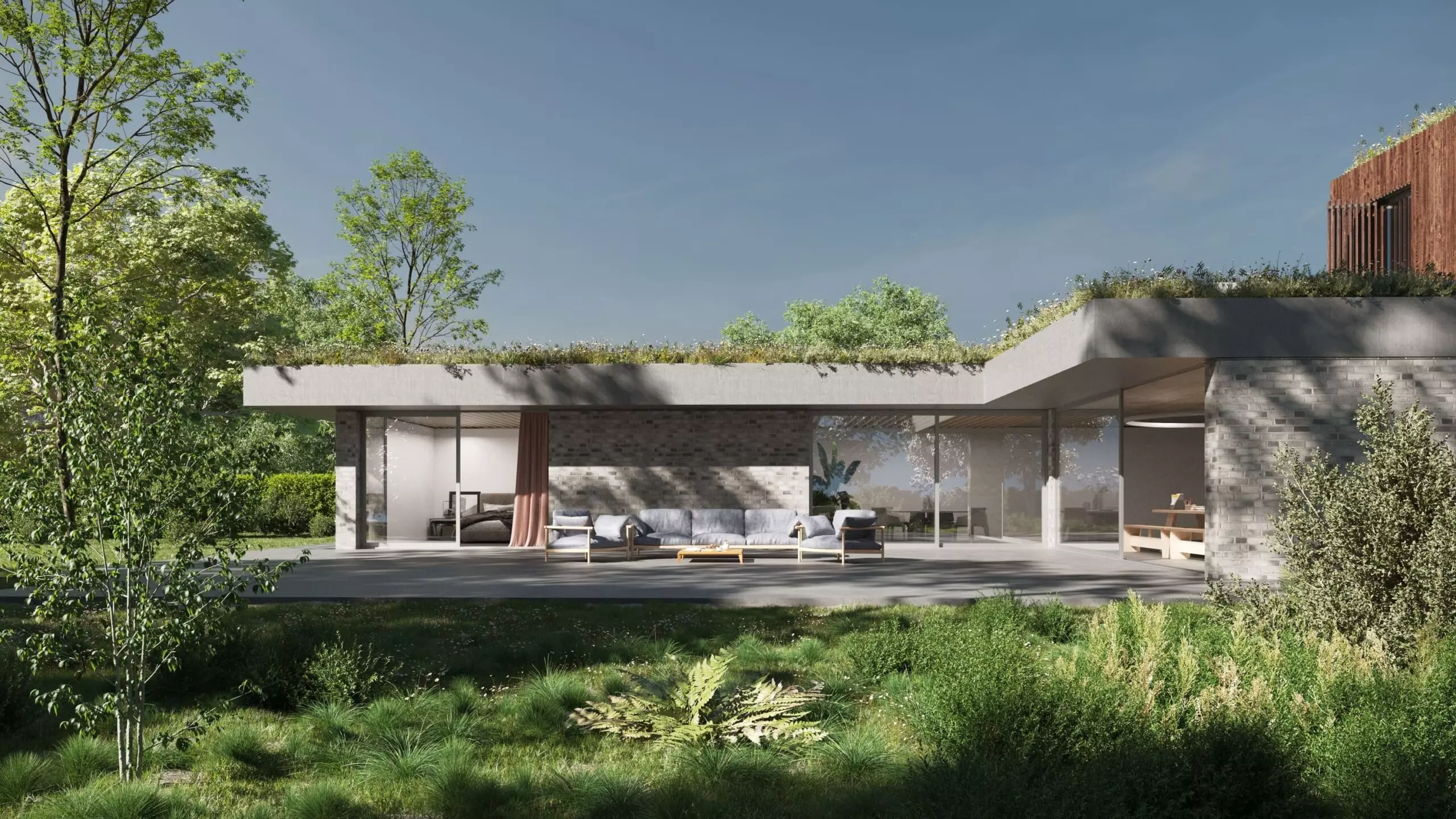
Exterior stills – the core of architectural house rendering – communicate massing, façade articulation, landscape, and neighborhood fit. They are ideal for Stage 2–3 design reviews, planning submissions, and early marketing. When local context matters, photomontage merges CGI with site photography to validate scale and materiality.
Interior stills
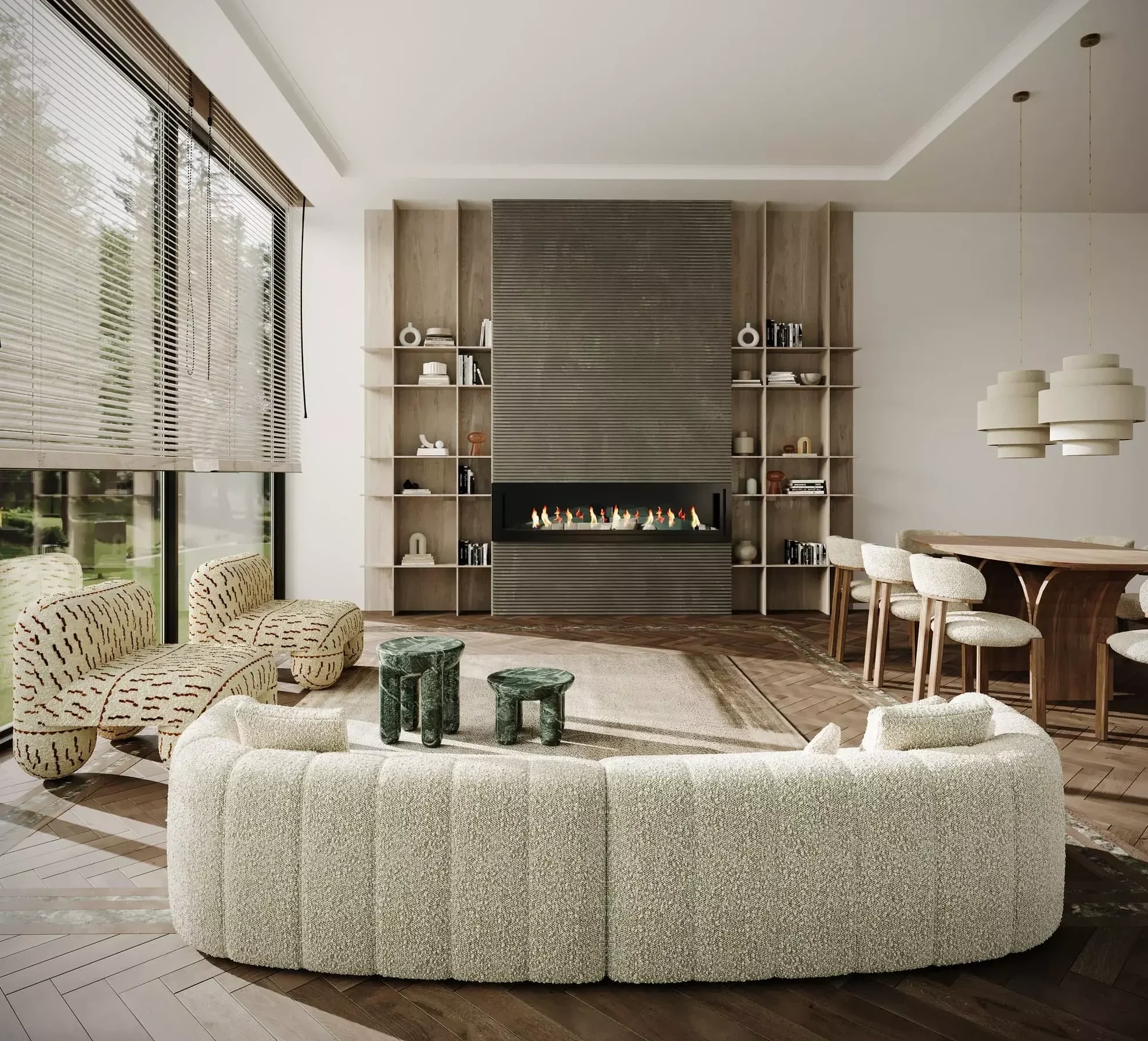
Interior stills demonstrate spatial quality, daylight behavior, and material junctions. Designers use them to test joinery, FF&E placement, and lighting strategies; developers deploy them in brochures and listing pages to explain plan variations. This is one of the most commonly requested categories of residential renderings because it directly influences buyer perception.
Aerial and site views
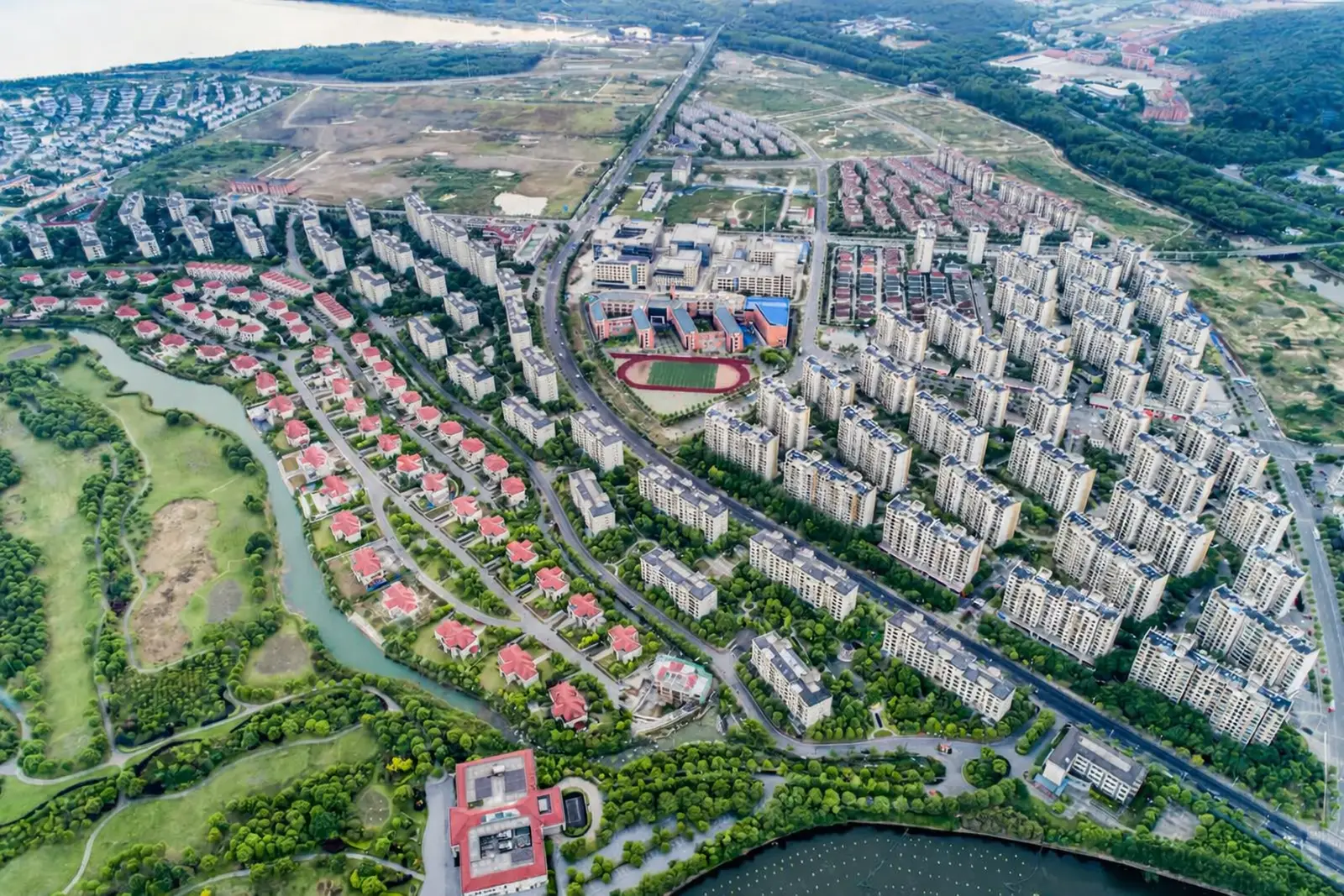
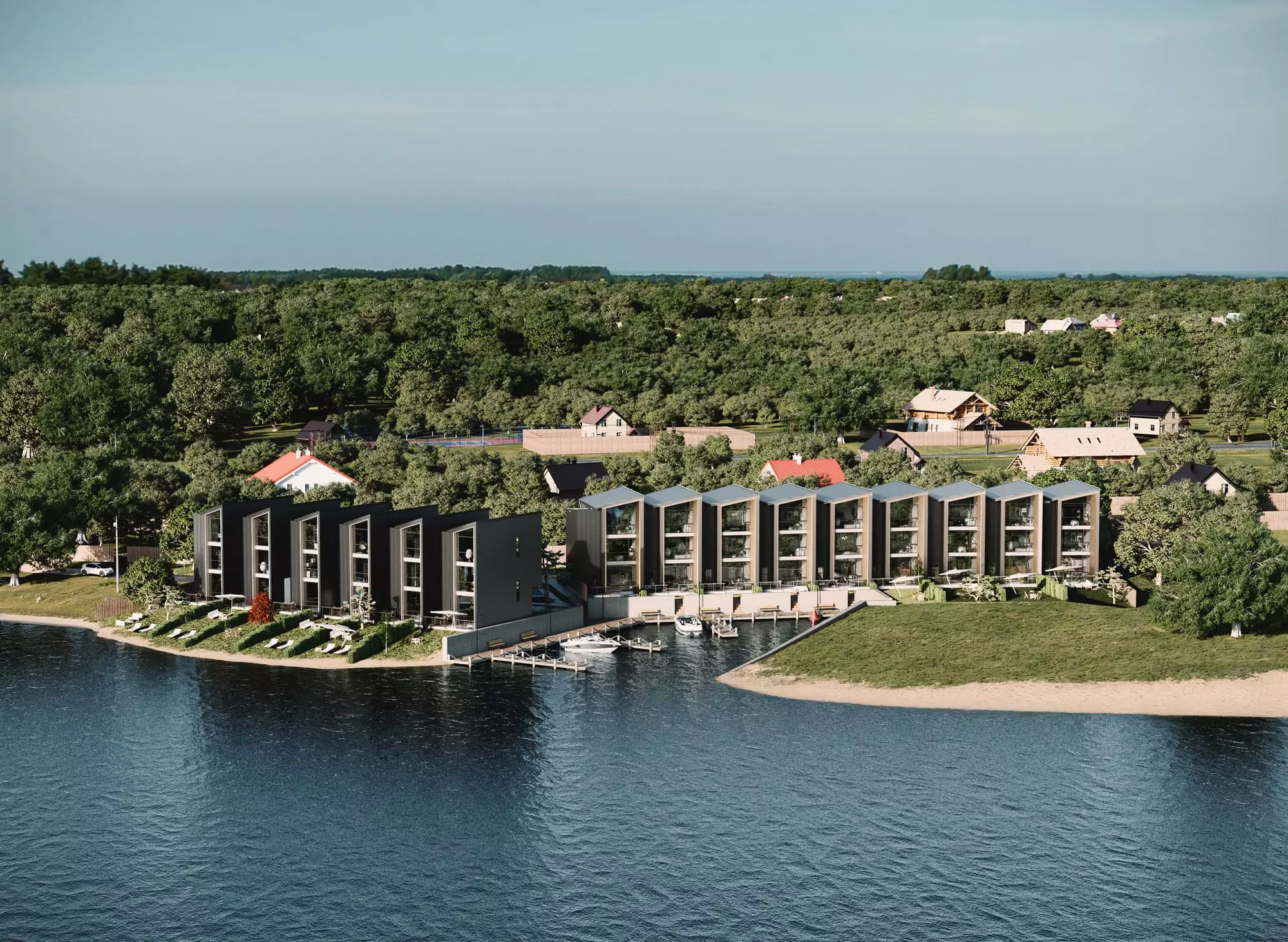
Aerial CGIs and drone‑matched composites reveal plot orientation, access, and amenity relationships. For subdivisions and multifamily communities, they help sales agents explain wayfinding, parking, landscape, and shared services at a glance.
Animation and short films
Motion enables storytelling through arrival sequences, day–night lighting shifts, and seasonal landscape cues. Well-planned animations replace multiple stills when a developer needs a cohesive story for conferences or investor decks.
360 panoramas and virtual tours
Spherical renderings and web‑based tours allow buyers to self‑navigate units and amenity spaces. They are especially practical for off‑plan sales and international audiences, and they integrate smoothly with an on-site kiosk or an embedded web apartment viewer.
Product and furniture renders
For custom homes, suppliers often need standalone CGI of kitchens, wardrobes, or lighting. Isolated product renders de‑risk procurement by clarifying finish schedules and joinery interfaces before fabrication.
Photomontage for planning
When neighbors and planning officers need assurance, photomontage shows the proposal within verified photography from eye‑level viewpoints. It’s a precise way to demonstrate overlook, shading, and street rhythm for detached homes and townhouses – a disciplined form of house rendering that supports approvals.
Practical use cases across the residential lifecycle
Residential CGI earns its keep when it is mapped to concrete tasks. During feasibility, massing studies help architects compare roof profiles, setbacks, and daylight access. In schematic design, material tests and lighting options resolve early uncertainty without site mockups. For contractors, visual method statements and on‑site reference boards reduce misinterpretation in finishing stages.
Marketing teams rely on CGI to launch pre‑sales while drawings are still evolving. A single hero exterior, supported by two to four interior views per typology, typically sustains a soft launch while design development continues in parallel. Multifamily developers benefit from tiered deliverables: community aerials for awareness, amenity interiors for lifestyle positioning, and unit‑level vignettes to drive inquiries.
To see how these visuals translate into real-world marketing assets and planning contexts, you can review our photorealistic exterior visualization projects showcasing different property types and development scales.
Construction managers and procurement specialists apply imagery to communicate installation sequences, tolerances, and finish alignment. For example, a staircase with open risers and concealed handrail lighting can be clarified in CGI with exploded details, reducing RFIs and rework. In short, 3D rendering for home construction functions as a coordination tool as much as a marketing asset.
Workflow, collaboration, and quality control
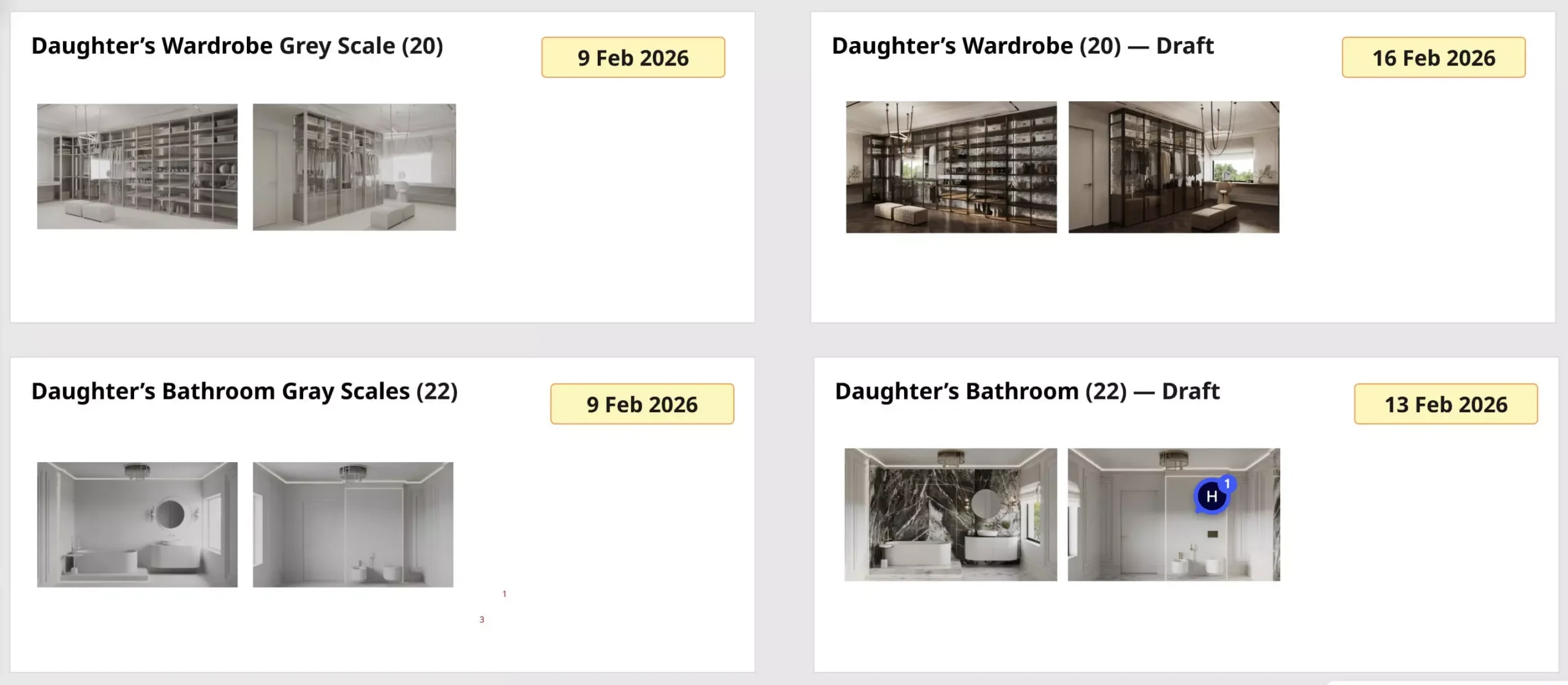
Effective visualization mirrors professional design practice. Our 3D rendering company usually requests the latest drawings or BIM exports, finishes, and reference photography or mood boards. A structured brief defines camera views, time of day, landscape emphasis, and furniture level. Preview rounds begin with clay renders, where geometry and composition are reviewed in a neutral, grayscale format. The process then moves to textured, full-color draft renders to refine material accuracy and overall visual quality. Each stage has explicit review criteria, so architects approve geometry before materials, and developers validate style before atmospheric polish.
For marketing directors, alignment with brand guidelines matters as much as photorealism. Color science, interior styling, and asset naming conventions ensure that CGIs plug directly into brochures, websites, and signage. Production is tracked with issue logs and per‑view checklists covering geometry, UVs, material IDs, light balance, and anti‑aliasing. That discipline is what differentiates an ad‑hoc vendor from a professional 3D rendering studio.
Benefits and measurable impact
The value of visualization is quantifiable across operations and marketing.
The McKinsey Global Institute identified construction as one of the least digitized industries and estimated a $1.6 trillion annual productivity opportunity from improved processes and technology adoption. In practice, 3D visualization can support this broader push by helping make decisions earlier and with greater clarity.
Where visuals move the needle most:
Faster design approvals when homeowners see materials and daylight accurately
Clearer coordination for finishes and joinery, reducing RFIs near handover
Earlier pre‑sales using consistent interior storylines across unit types
Fewer on‑site changes as stakeholders align on layout and interfaces
Better neighbor and planner understanding via verified photomontage
Stronger brand coherence across brochures, site hoarding, and digital ads
In marketing contexts, a single well‑composed hero – the classic 3d exterior house rendering – often sets the tone for all downstream materials, with interiors maintaining continuity of style, furniture, and color temperature. For buyers, even a simple rendering eliminates guesswork around massing, glazing, and landscape, reducing friction at the moment of commitment.
Typical deliverables, decision owners, and timelines
The following table summarizes common deliverables, what they unlock, who often signs them off, and indicative turnaround ranges that vary by scope and revision load.
Deliverable type
Primary purpose
Typical decision owner
Indicative turnaround
Notes
Exterior still (street or garden)
Façade, materials, context
Lead architect, developer
3–6 working days
Add photomontage when planning sensitivity is high
Interior still (kitchen/living/bed)
Layout, daylight, finishes
Interior designer, marketing
3–5 working days
Reuse model to scale multiple room variants
Aerial or site CGI
Orientation, access, amenities
Developer, planning consultant
5–8 working days
Drone-match for verified context
360 panorama/tour
Remote walkthroughs, presales
Marketing director
5–10 working days
Host in web viewer; track analytics
Short animation (10–45 sec)
Narrative and brand
Marketing director
10–20 working days
Storyboard early to control cost
Product/furniture CGI
Procurement clarity
Architect, supplier
2–4 working days
Useful for joinery sign-off and manufacturing
For projects that demand extra polish and art direction – luxury listings, branded residences, or flagship sales galleries – GENENSE offers high-end residential rendering services with additional styling passes, layered atmospherics, and hero‑grade postproduction to meet premium marketing standards.
Selecting the right approach and managing cost
Visualization spend is not just an aesthetic choice; it is an operational lever. The most effective way to control the budget is to lock camera views early, freeze geometry before materials, and consolidate comments per review cycle. On typical single-family homes, a small set of exterior views and several key interior spaces is often enough to cover the core marketing needs. Multifamily launches benefit from one community aerial, two amenity interiors, and one to two interiors per unit type, with optional 360s reserved for top‑performing plans.
Cost drivers are visibility of complex elements (glazing, metal, timber textures), landscape scope, furniture complexity, and revision volume. Using a consistent asset library accelerates throughput across phases; it also ensures that the kitchen finish in your hero still matches the brochure and the web gallery. When developers request a fast track, providing clean CAD/BIM exports and reference photos can reduce revision cycles and save both time and budget.
Closing note
In practice, choosing the right partner and approach early on makes a measurable difference in both timelines and output quality. If you want to better understand how structured workflows and deliverables are handled in real projects, explore the results of our high-end residential rendering services designed for architects, developers, and real estate teams.
Whether you are coordinating joinery details, preparing a planning pack, or launching presales, targeted visualization de‑risks decisions and accelerates momentum. If you want to explore the right mix of deliverables for your next development – from schematic photomontages to launch‑ready interiors – our team can outline a lean scope and schedule tailored to your objectives.
FAQ
We typically begin with RVT or PDF files and reference images. Early on, we share gray massing previews to confirm geometry and camera angles. Changes are most efficient when geometry is approved before materials; this sequencing prevents cascading rework during lighting and postproduction.
Daylight and material behavior are calibrated against real references. We use measured PBR materials, realistic IES lighting profiles, and scene‑specific exposure settings so spaces read as they would on site – from specular highlights on stone to soft ambient bounce in matte paints. This approach yields consistent results across renders and animations.
Yes. Verified photomontage places the proposal in accurate site photography from agreed viewpoints, helping planners and neighbors understand massing, overlook, and street character. It’s a professionalized form of house rendering that supports transparent dialogue.
We build a style guide at the outset – color temperature, contrast, prop styling, and sky moods – to ensure consistency across all outputs. This lets your brochure, site hoarding, and digital ads share a coherent visual language from the same master scene.
Rate article:
Nice
Average rating: 5 / 5
Vote count: 2
Denys Borozenets
CEO at GENENSE
Denys is the CEO of GENENSE Studio. His mission is to build an international community of passionate CGI professionals, where everyone can unlock their potential by creating high-end digital content that helps highlight any product on the global stage.
As a leader, he holds himself to the highest standard of responsibility - for both his own work and that of his team. For the members of GENENSE, responsiveness and open communication are the core values that drive their collective success.
In today’s architecture RFP (Request For Proposal) market in the US, experience and portfolio alone do not win projects anymore. In 2026, 3D visualization plays a big role in how fast a committee understands, supports, and remembers a project. Florida’s procurement market moves fast and has its own rules. Teams often review many proposals in […]
In architectural tenders in the UK, competition is not about ideas, but about how clearly they are communicated. Success depends on a well-built architecture proposal presentation, and 3D visualisation often becomes the key factor that strengthens the evaluation of design quality. Architecture tenders in the UK are the main way to win large projects in […]
For developers and architects, 3D rendering services in the Netherlands create realistic images of real estate projects. It helps speed up approvals, present ideas better to investors, and support early-stage sales. It also reduces the number of revisions and makes cooperation between all project participants clearer. GENENSE provides 3D rendering for international projects, including work […]
3D kitchen rendering in the UK helps create a well-structured design environment for testing, refining and validating the design of a space before construction begins, being essential for architects, developers, manufacturers and interior designers. Professional rendering minimises the risk of uncertainties and additional costs caused by them through accurate visual simulation. In the UK context, […]
3D architectural visualisation in the UK is not a decorative add-on, but a functional decision-support tool for stakeholders in search of unique design solutions before construction begins. It collects drawings and BIM data to create a high-quality visual reference. 3d rendering services in the UK are essential for complex projects, which involve interaction of investors, […]
3D rendering services help check a project before it becomes expensive. They make it possible to fix architectural decisions, align them between all parties, and remove uncertainty at the planning stage, when changes do not affect the schedule or budget. For 3D architectural rendering in Costa Rica, strong visual accuracy is required. Projects often work […]